 Add TopTechs as a preferred source
The best water purifier for home in India is the KENT Grand RO at around ₹11,899, rated 4.4 stars from 8,231 buyers. It handles borewell, tanker and municipal water, and its mineral control keeps RO water from tasting flat.
Before you buy any RO purifier, though, spend ₹250 on a TDS meter. Depending on what it reads, you may not need RO at all, and the manufacturers say so in their own listings.
Quick answer
- Best overallKENT Grand RO, around ₹11,899
- Best for municipal waterKENT Ultra Storage UV+UF, around ₹7,799
- Best value ROAquaguard Sure Delight, around ₹7,999
- Lowest maintenanceNative M1 by Urban Company, around ₹15,999
- Best premiumNative M2 Pro, around ₹19,499
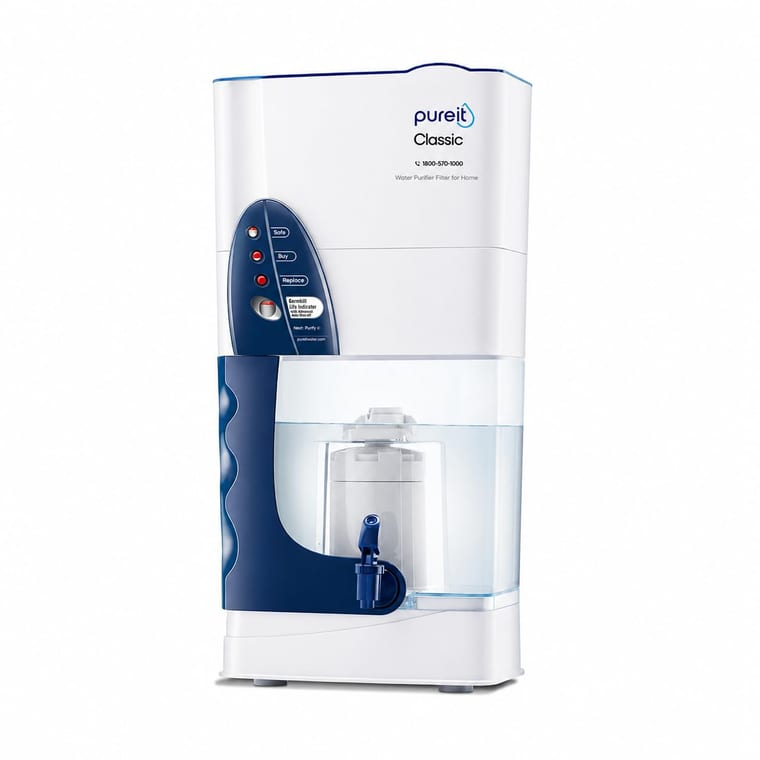
- Most affordablePureit Classic 23L, around ₹2,999
Prices, ratings and review counts checked October 2026 on Amazon.in. The Great Indian Festival starts 8 October, so expect prices to move. Tap any name for the live price.
Best water purifiers in India: quick comparison
Sorted by price. RO removes dissolved salts and metals. UV kills germs. UF and MF are fine membranes that strain out dirt and bacteria.
| Purifier | Price | Technology | Suits | Rating (reviews) |
|---|---|---|---|---|
| ~₹2,999 | Gravity, carbon | Treated tap water, no power | 4.0 (634) | |
| ~₹7,499 | RO + MF | High-TDS water | 4.2 (1,789) | |
| ~₹7,799 | UV + UF | Low-TDS tap water | 4.0 (4,513) | |
| ~₹7,999 | RO | Borewell, tanker, TDS above 200 | 4.3 (6,001) | |
| ~₹9,499 | UV + UF | TDS up to 200 | 4.0 (909) | |
| ~₹11,899 | RO + UF + UV, TDS control | Any source | 4.4 (8,231) | |
| ~₹12,499 | RO + UV + UF | TDS up to 2,000 | 4.2 (9,754) | |
| ~₹15,999 | RO + UV | Any source | 4.3 (7,737) | |
| ~₹19,499 | RO + UV | Any source | 4.4 (3,019) |
Check your TDS before you pay for RO
TDS means total dissolved solids: the salts and minerals dissolved in your water, measured in ppm (the same as mg/L). RO is the only common technology that removes them. UV and UF do not touch them at all.
So whether you need RO depends on one question. Is your TDS high enough to need lowering?
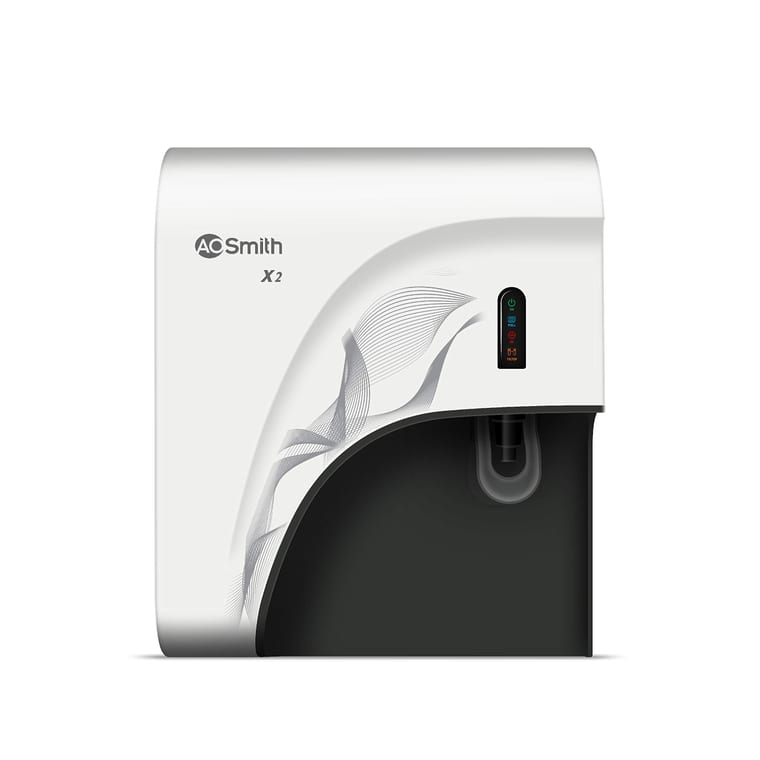
The purifier makers draw that line themselves. Aquaguard's listing for its Sure Delight RO says it works with borewell and tanker water "with TDS >200 ppm Only". AO Smith's X2, a UV and UF model, says it "can be used for TDS up to 200ppm".
The official standard sits higher still. The Bureau of Indian Standards sets 500 mg/L as the acceptable TDS limit for drinking water. In 2019 the National Green Tribunal said RO systems should not be used where TDS is below 500, because RO strips minerals and throws away water.
A basic TDS meter costs about ₹200 to ₹300 on Amazon. Dip it in a glass of your tap water and read the number:
- Below 200 ppm. Typical of many city corporation supplies. TDS does not measure germs, so you still need a purifier, and UV with UF covers it. RO would only strip out minerals.
- 200 to 500 ppm. The grey zone. Makers sell RO for this range, while the NGT said RO should not be used below 500. If you choose RO, get one with a mineral or TDS control valve, so the water does not come out flat.
- Above 500 ppm. Common with borewell and tanker water. RO is the right choice.
Some water needs RO whatever the meter shows. That includes borewell water, tanker water and supplies in areas with known fluoride or arsenic problems, because fluoride and arsenic do not register as high TDS and tanker water can change from one delivery to the next.
Treat a supply that switches between tap and tanker through the year as tanker water.
RO, UV, UF and gravity: which suits your home
- RO (reverse osmosis). Pushes water through a membrane that blocks dissolved salts and heavy metals. Needs electricity and water pressure. Rejects part of the water as waste.
- UV (ultraviolet). A lamp that kills bacteria and viruses. Removes nothing dissolved, and needs clear water to work, so it is always paired with a filter.
- UF and MF. Very fine membranes that strain out dirt, cysts and bacteria. Many work without electricity. They do not change TDS.
- Gravity with carbon. Improves taste and removes chlorine. Works with no power or pressure. Best suited to water that is already treated.
Most RO purifiers sold in India combine these stages in one box. Whether you need the RO stage is the decision, and the TDS meter makes it for you.
Best water purifier for home overall: KENT Grand RO
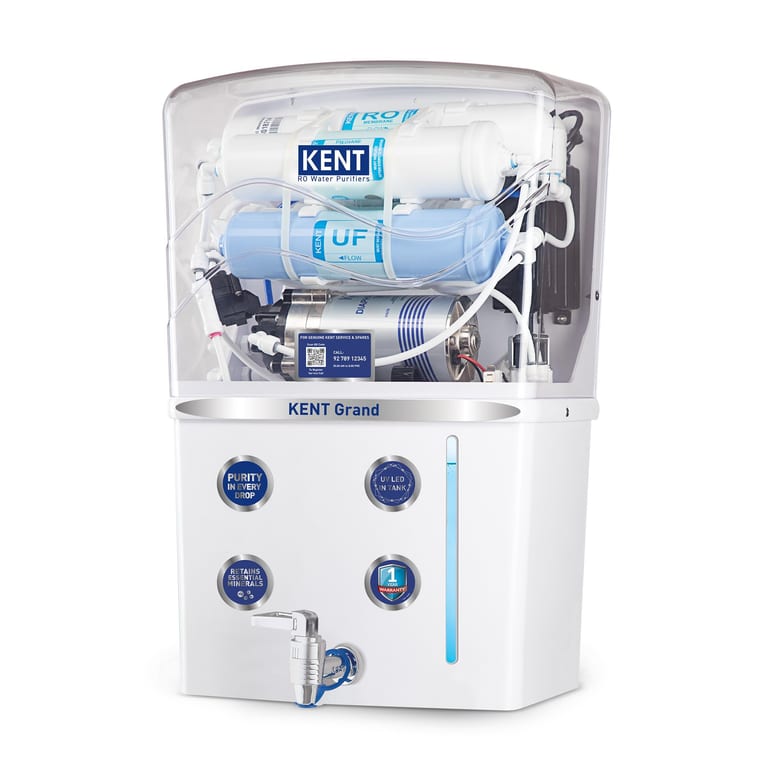
KENT Grand RO
Handles any water source, rated 4.4 by 8,231 buyers.
~₹11,899Amazon.in
Check price →Around ₹11,899, rated 4.4 from 8,231 buyers. No other purifier here pairs a rating that high with that many reviews.
The TDS control valve is the reason it suits so many homes. It blends a little filtered water back into the RO output, so low-TDS water keeps some minerals and high-TDS water still gets fully treated. If your supply changes between tap and tanker, a technician can reset the valve to match.
It has RO and UF stages, plus a UV lamp inside the storage tank to keep stored water free of germs. The first year of service and repair visits is included.
- Buy it if you are unsure of your water, or it comes from more than one source.
- Skip it if your TDS reads under 200. A UV and UF purifier costs less and wastes no water.
Best for municipal water: KENT Ultra Storage UV+UF
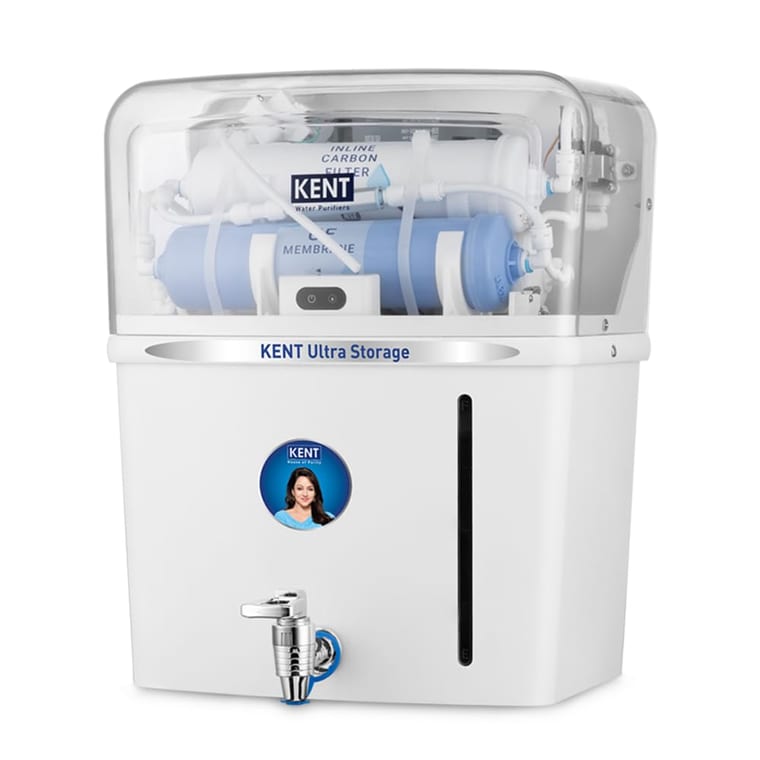
KENT Ultra Storage UV+UF
For low-TDS city water. Keeps minerals, wastes no water.
~₹7,799Amazon.in
Check price →Around ₹7,799, rated 4.0 from 4,513 buyers.
If your TDS meter reads below 200, this is the purifier to buy. UV kills bacteria and viruses, UF strains out dirt and cysts, and the 8 litre tank covers a family's drinking water for the day.
It keeps every drop. With no RO stage, nothing goes down the drain, and the minerals already in your water stay there.
- Buy it if you get city corporation water and your TDS is low.
- Skip it if you use borewell or tanker water, or your area has fluoride or arsenic problems. UV and UF do not remove dissolved salts, fluoride or arsenic.
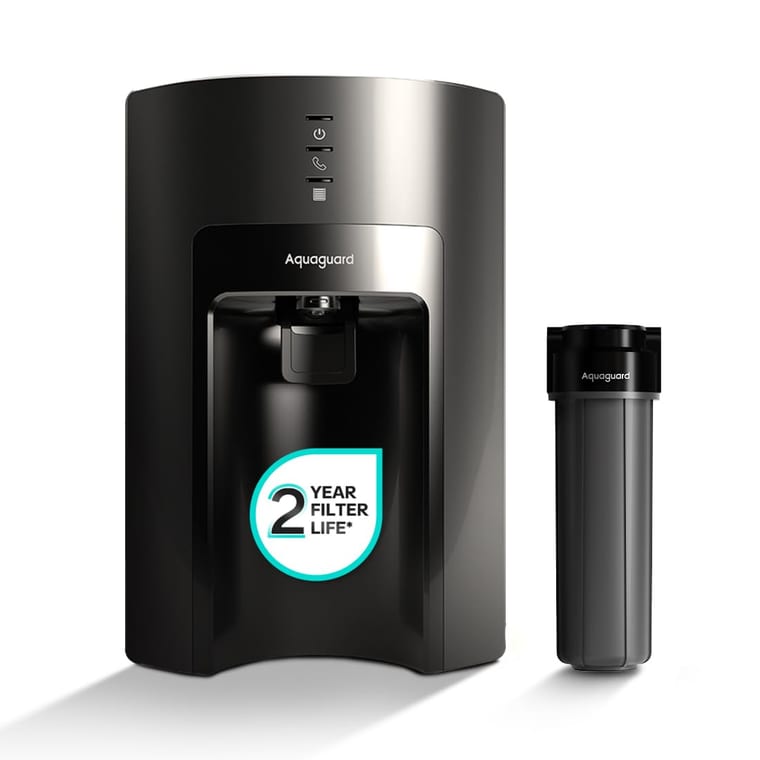
Best value RO: Aquaguard Sure Delight
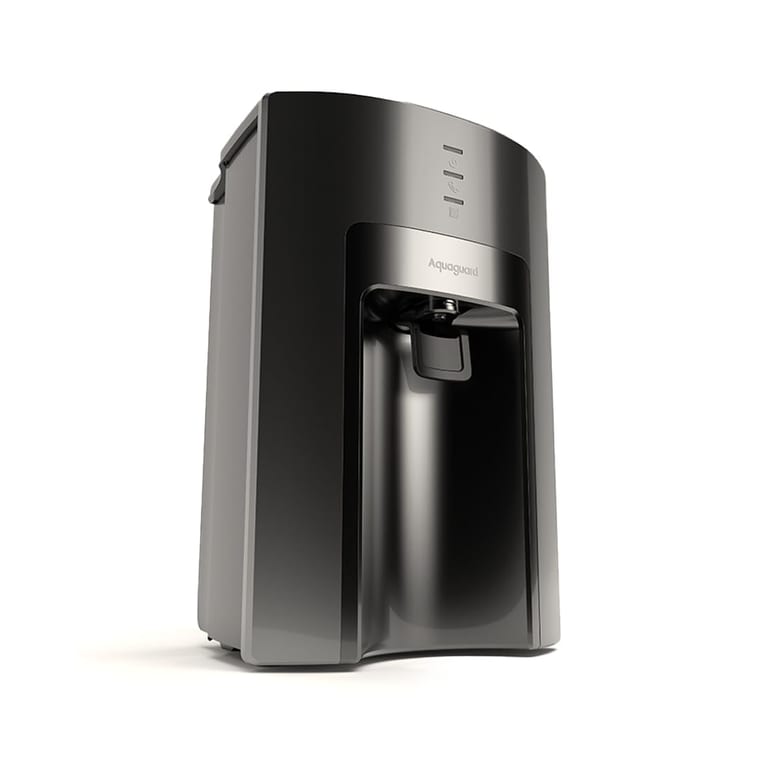
Aquaguard Sure Delight
Affordable RO for borewell and tanker water, 6,001 ratings.
~₹7,999Amazon.in
Check price →Around ₹7,999, rated 4.3 from 6,001 buyers.
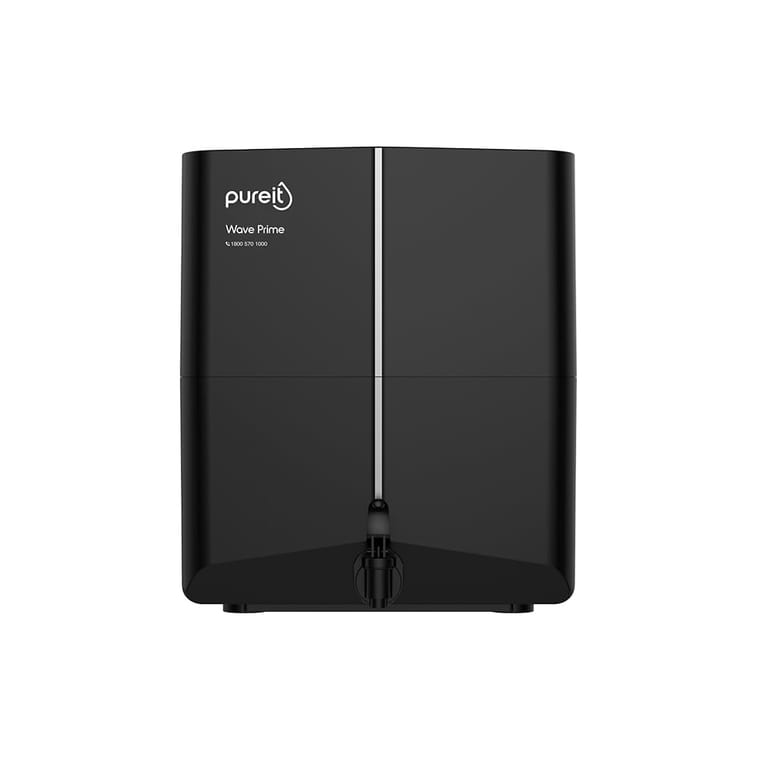
The Pureit Wave Prime RO costs ₹500 less, but Aquaguard says its service network covers over 19,000 pin codes, and that reach matters when a filter needs changing. Aquaguard's listing says this model is meant for water with TDS above 200 ppm.
The cartridge is rated for 1 year or 6,000 litres. A family of four drinking about four litres each a day uses roughly 5,800 litres a year, so plan on one replacement every year.
- Buy it if you have borewell or tanker water and want RO at the lowest sensible price.
- Worth knowing: it has no mineral or TDS control, so if your TDS is below 500, its water will taste flat.
Lowest maintenance: Native M1 by Urban Company
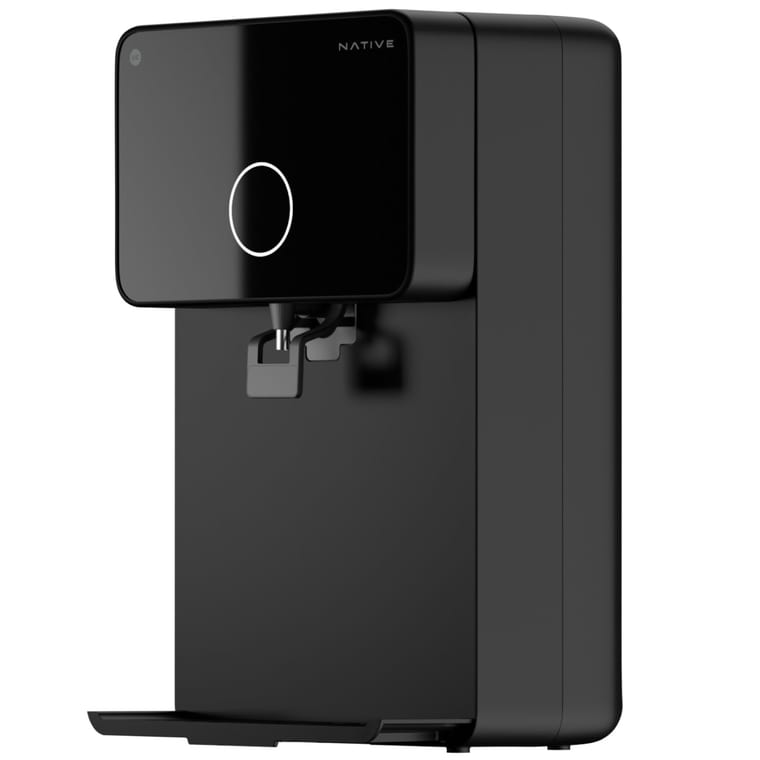
Native M1 by Urban Company
Two years with no service visits, and a published ₹5,499 refresh.
~₹15,999Amazon.in
Check price →Around ₹15,999, rated 4.3 from 7,737 buyers.
Native's promise is unusual in this category: no service visits for two years, and a two-year warranty that covers filters, membranes and electrical parts whatever your water quality.
It also publishes what happens next. After two years, a filter refresh costs ₹5,499, and that price includes the filters, the service and another two years of warranty. Most brands make you ask for that figure.
A TDS meter comes in the box, so you can check your water before and after.
- Buy it if you want to stop dealing with service technicians and annual maintenance contracts.
- Skip it if your water is low in TDS. You are paying for an RO stage you may not need.
Best for saving water: Aquaguard Delight Aquasaver
Around ₹12,499, rated 4.2.
Every RO purifier sends part of its water down the drain. Aquaguard says this model recovers 60 percent more water than its older RO purifiers, which matters in homes that depend on a tanker or a limited supply.
It handles TDS up to 2,000 mg/L, adds a large sediment pre-filter for muddy water, and has a two-year filter life.
- Buy it if you need RO and water is scarce or expensive where you live.
- Worth knowing: its 9,754 ratings are shared across several Delight variants, so they describe the range rather than this exact model.
Best premium: Native M2 Pro
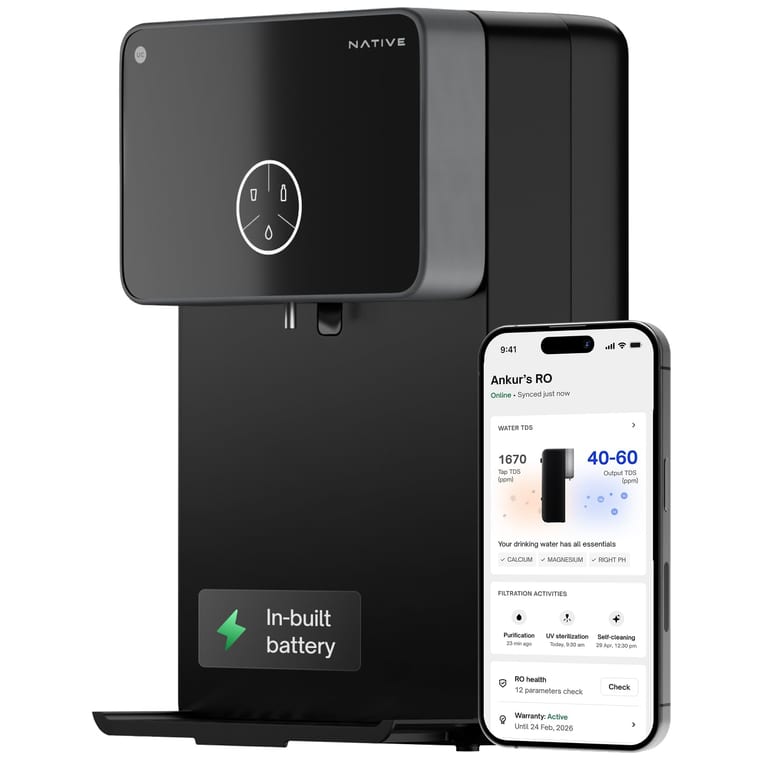
Native M2 Pro
Real-time TDS tracking in the app, rated 4.4.
~₹19,499Amazon.in
Check price →Around ₹19,499, rated 4.4 from 3,019 buyers, level with the KENT for the top rating here.
Through the app it tracks the TDS of the water going in and coming out in real time, along with filter health and how much you drink, so you never have to guess when the water quality changes or a filter wears out.
It keeps Native's two-year no-service promise and adds preset dispensing, so you can fill a bottle at the touch of a button.
- Buy it if you want to see your water quality rather than trust a filter warning light.
- Skip it if the app features do not matter to you. The M1 does the same purification for ₹3,500 less.
Most affordable: Pureit Classic 23L
Around ₹2,999, rated 4.0 from 634 buyers.
A gravity purifier needs no electricity and no water pressure. You pour water in at the top and it filters down through activated carbon into a 23 litre container.
That makes it useful where power cuts are frequent, or in a rented home where you cannot fit a wall unit. It improves taste and removes chlorine, but it does not lower TDS and offers less protection than a UV or RO purifier.
- Buy it if your water is already treated city supply and you have no steady power.
- Skip it if you use borewell or tanker water.
Running costs after the first year
The price on the box covers the machine and, usually, the first year of service. After that you pay for filters, either one at a time or through an annual maintenance contract.
- Ask for the replacement filter price before you buy. Few listings show it. Native is an exception, at ₹5,499 for a two-year refresh.
- Check the cartridge rating in litres. Aquaguard's Sure Delight cartridge is rated for 6,000 litres, about a year for a family of four.
- Read what the warranty covers. Some cover only electrical parts. Native's covers filters and membranes as well.
- Budget for the reject water. An RO purifier sends part of every fill to the drain. Water-saving models cut that waste, which matters if you pay for tanker water.
What to check before you buy
- Test your TDS first. A ₹250 meter tells you whether you need RO, and it can save you thousands.
- Match the purifier to your source. Tap water with low TDS needs UV and UF. Borewell and tanker water needs RO.
- Look for mineral or TDS control on RO models. Without it, low-TDS water comes out flat.
- Check the storage tank size. 7 to 8 litres suits most families. A tank lets you keep drinking water through a power cut.
- Confirm the service network in your pin code. A purifier with no technician nearby is a box of filters you cannot change.
- Wall space and a power point. Most units need both near the kitchen tap, so measure before you order.
Which water purifier to buy
For most homes the answer is the KENT Grand RO at around ₹11,899. It handles any source, adjusts to low-TDS water, and 8,231 buyers rate it 4.4.
If your TDS meter reads under 200, buy the KENT Ultra Storage UV+UF at ₹7,799 instead. It keeps your minerals and wastes no water. Borewell and tanker water, and areas with fluoride or arsenic problems, still need RO.
And if service visits are what you dread, the Native M1 at ₹15,999 promises two years without one.
Whichever you choose, test the water first. Your TDS reading and your water source together decide whether you need RO, and the meter costs less than one filter.