Add TopTechs as a preferred source
The best projector for home in India is the XGIMI Vibe One at around ₹24,999, rated 4.7 stars from 538 buyers. That is the highest score of any projector we checked with a review count worth trusting.
Two numbers on every projector listing are written to mislead you. Once you know how to read them, most of the budget market stops looking like a bargain.
Quick answer
- Best overallXGIMI Vibe One, around ₹24,999
- Best under ₹10,000Portronics Beem 450, around ₹9,649
- Best for a bright roomEpson EB-W06, around ₹40,500
- Best portableXGIMI Halo+, around ₹74,999
- Best 4KBenQ GP520, around ₹1,24,990
- Most affordablePortronics Beem 440, around ₹5,899
Prices, ratings and review counts checked October 2026 on Amazon.in. Native resolutions were read from each product's own specification table. Tap any name for the live price.
Best projectors for home: quick comparison
Sorted by price. Native resolution comes from each product's specification table rather than its title.
| Projector | Price | Native resolution | Rating (reviews) |
|---|---|---|---|
| ~₹5,899 | 1280 x 720 | 4.0 (1,265) | |
| ~₹9,649 | 1920 x 1080 | 4.2 (80) | |
| ~₹9,999 | 1280 x 720 | 4.1 (153) | |
| ~₹13,899 | 1920 x 1080 | 4.2 (40) | |
| ~₹24,999 | 1920 x 1080 | 4.7 (538) | |
| ~₹26,979 | 1024 x 768 | 4.3 (48) | |
| ~₹40,500 | 1280 x 800 | 4.4 (150) | |
| ~₹74,999 | 1920 x 1080 | 4.5 (115) | |
| ~₹1,24,990 | 3840 x 2160 | 4.3 (97) |
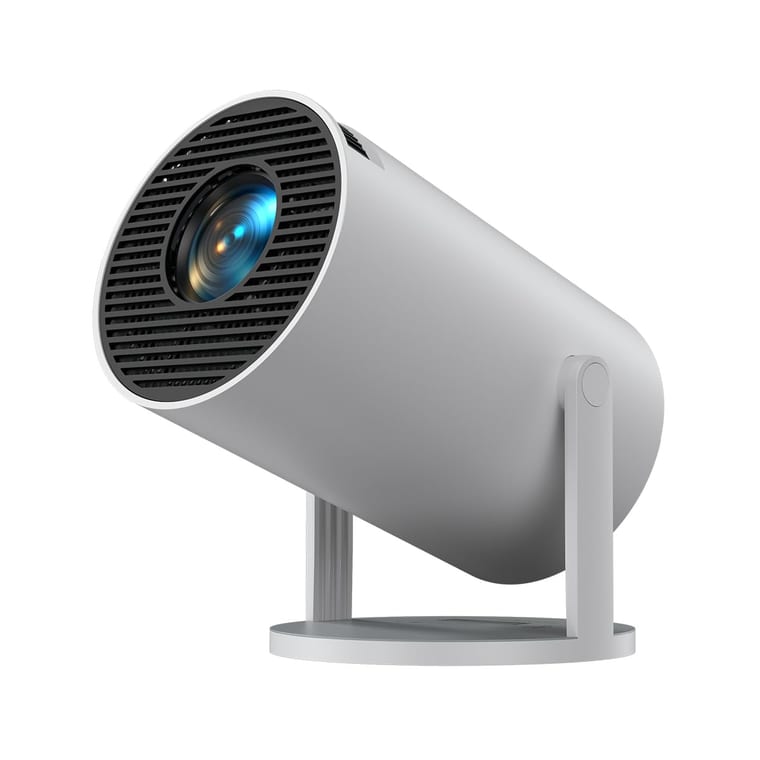
Supported resolution and native resolution are different things
A projector advertised as 4K Support can be a 720p projector. Supported means the projector accepts a 4K signal, then shrinks it to fit whatever its chip can display.
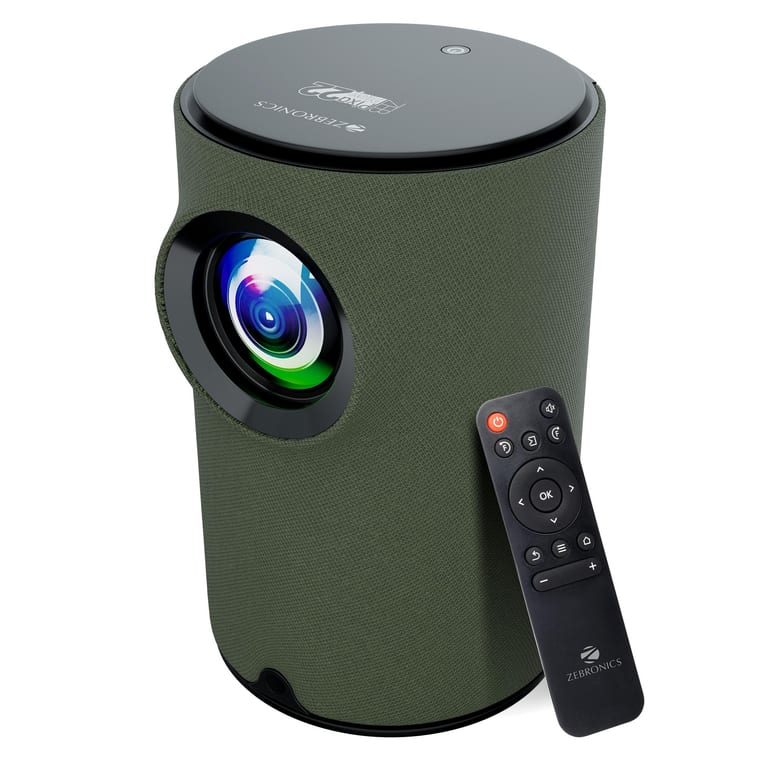
The clearest example on Amazon.in right now is the Zebronics Pixaplay 22 at ₹9,999. The title says 4K Support. Amazon's own specification table for that listing gives its display resolution as 1280 x 720.
Nothing about that is illegal. The projector does accept a 4K input. It just cannot show one.
So read the specification table rather than the title, and look for one of these words:
- Native 1080p or a listed resolution of 1920 x 1080. This is a real Full HD projector.
- Native 720p or 1280 x 720. Fine on a smaller wall, soft on a large one.
- 4K Support, 1080p Support, Supports 4K. These describe the input, and tell you nothing about the picture.
On a 100-inch wall the difference between native 720p and native 1080p is obvious from any sofa in the room.
Why a ₹10,000 projector claims more lumens than a ₹1,25,000 one
Here are three real listings, checked on the same day:
- Zebronics Pixaplay 25, ₹9,999, claims 7,500 lumens.
- Epson EB-W06, ₹40,500, claims 3,700 lumens.
- BenQ GP520, ₹1,24,990, claims 2,600 ANSI lumens.
The ₹10,000 projector is not three times brighter than the ₹1.25 lakh one. The units are different. Only ANSI lumens come from a defined measurement.
ANSI lumens is a defined standard. A tester measures brightness at nine points across a white screen and averages them. Epson, BenQ, ViewSonic and XGIMI publish ANSI or the closely related ISO figure.
Plain lumens on a budget listing usually means LED lumens or light-source lumens, measured at the bulb itself, before any of that light is lost inside the projector. A projector claiming 7,500 of those might deliver 700 to 1,500 ANSI.
A rough guide for reading listings:
- Under 500 ANSI. Needs a dark room. Fine for night viewing with the curtains shut.
- 500 to 1,000 ANSI. Comfortable at night, washed out in daylight.
- 1,000 to 2,000 ANSI. Watchable in a room with lamps on.
- 2,000 ANSI and up. Usable in a room with daylight in it.
If a budget listing claims thousands of lumens and never says ANSI, assume the real figure is a small fraction of that.
Best projector for home overall: XGIMI Vibe One
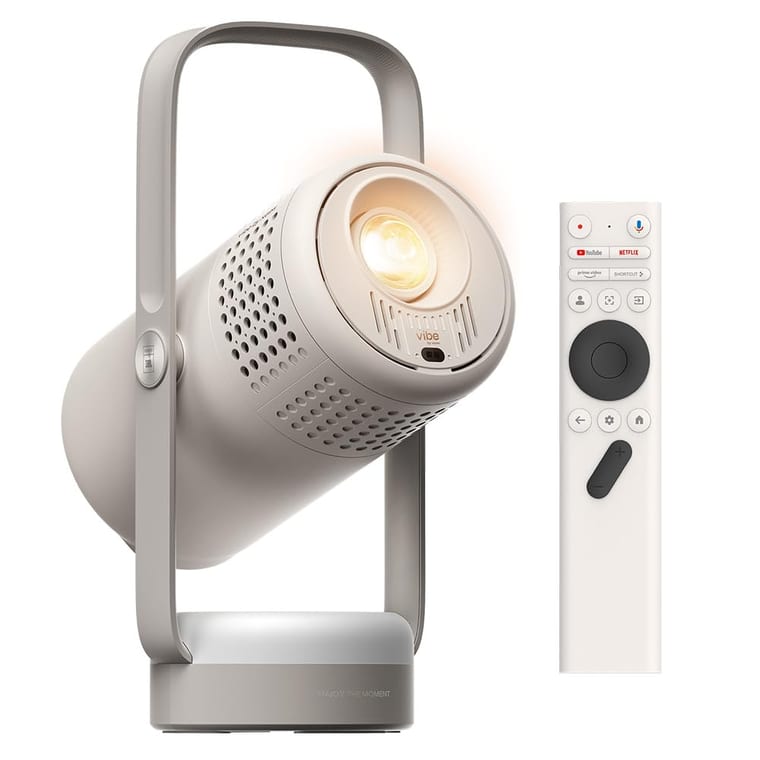
XGIMI Vibe One
Native 1080p, licensed Netflix, and a 4.7 rating from 538 buyers.
~₹24,999Amazon.in
Check price →Around ₹24,999, rated 4.7 from 538 buyers. No other projector here combines a score that high with that many reviews.
Native 1920 x 1080, official Google TV, and a licensed Netflix app. Most budget projectors run a modified Android build where Netflix either refuses to install or runs at 480p, and owners discover this after delivery.
Autofocus and keystone correction work without fuss, so you can move it and have a square picture in seconds.
It wants a dark or dim room. In daylight with the curtains open the picture washes out.
- Buy it if you want one projector that works properly for evening film nights.
- Skip it if your room is bright during viewing hours. Look at the Epson EB-W06.
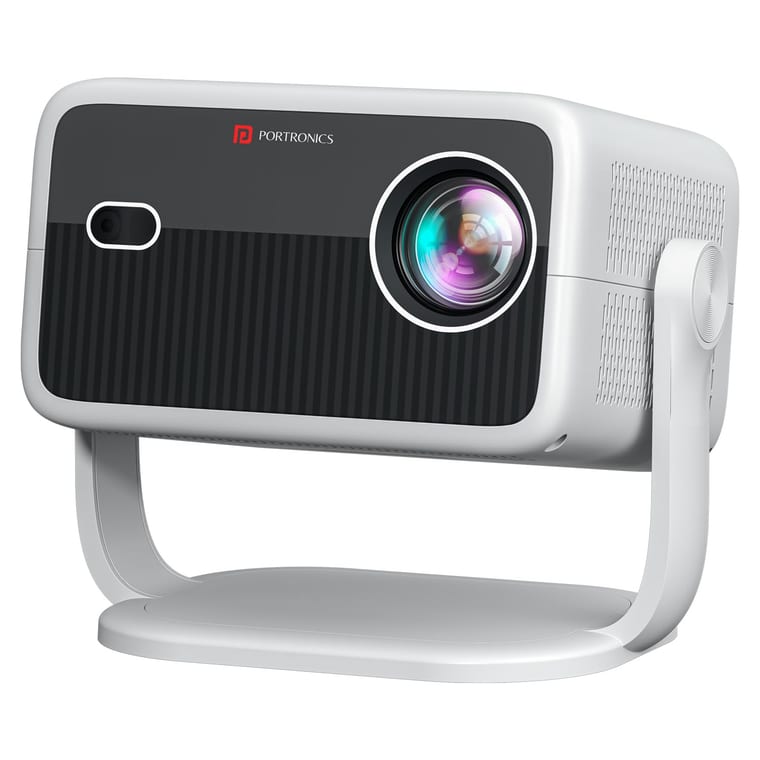
Best under ₹10,000: Portronics Beem 450
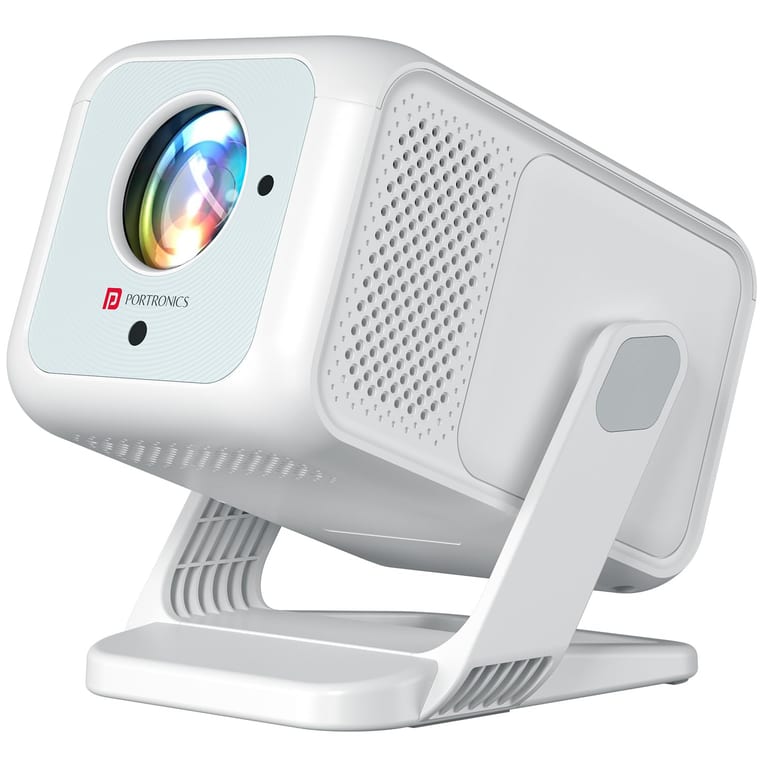
Portronics Beem 450
Real 1920 x 1080 for under ₹10,000, where rivals still ship 720p.
~₹9,649Amazon.in
Check price →Around ₹9,649, rated 4.2 from 80 buyers.
Its specification table lists 1920 x 1080, so this is genuinely Full HD rather than a 720p chip with Full HD on the box. At under ₹10,000 that is uncommon.
Compare it with the Zebronics Pixaplay 22 at ₹9,999, which is 1280 x 720 despite the 4K Support in its title. Same money, less than half the pixels.
- Buy it if you want real 1080p for under ₹10,000.
- Worth knowing: 80 ratings is a thin evidence base. The 720p Beem 440 below has 1,265.
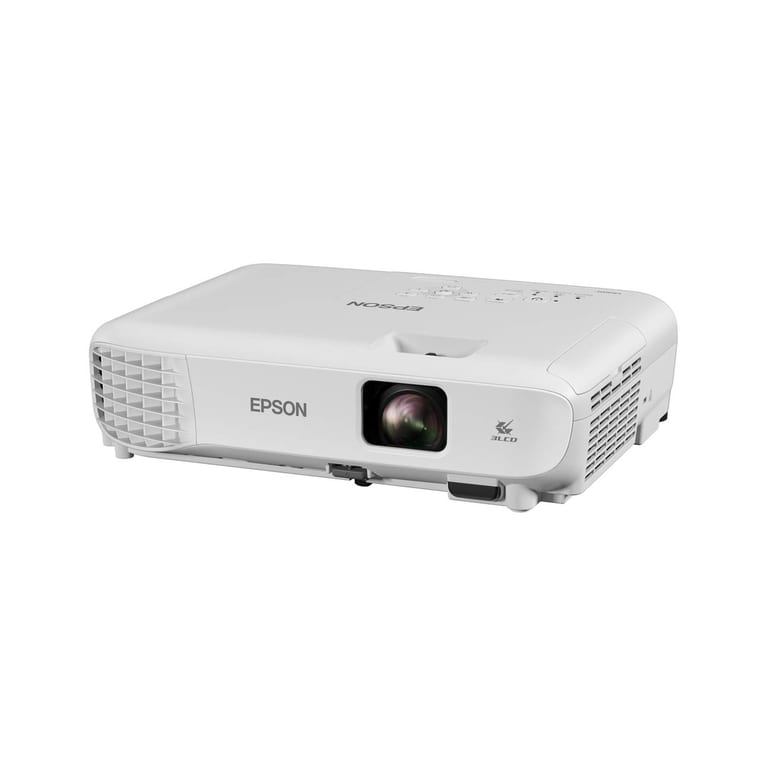
Best for a bright room: Epson EB-W06
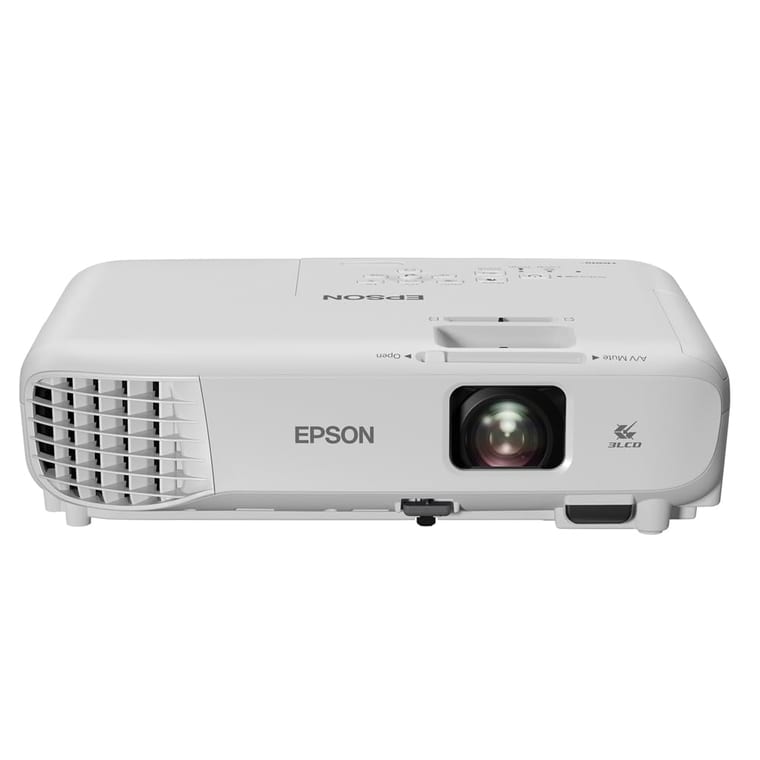
Epson EB-W06
3,700 measured lumens, the one here that works in a bright room.
~₹40,500Amazon.in
Check price →Around ₹40,500, rated 4.4 from 150 buyers.
3,700 lumens from Epson is a measured figure, and at that level the picture is still clear with the lights on. If your living room has large windows and you watch in the afternoon, brightness beats resolution every time.
The resolution is 1280 x 800, which is lower than the ₹9,649 Portronics. You are paying for light output and for a lamp and optics that will still be accurate in five years.
- Buy it if you cannot darken the room, or you want it for presentations as well as films.
- Skip it if you watch at night with curtains closed. The XGIMI gives a sharper picture for ₹15,000 less.
Best portable: XGIMI Halo+
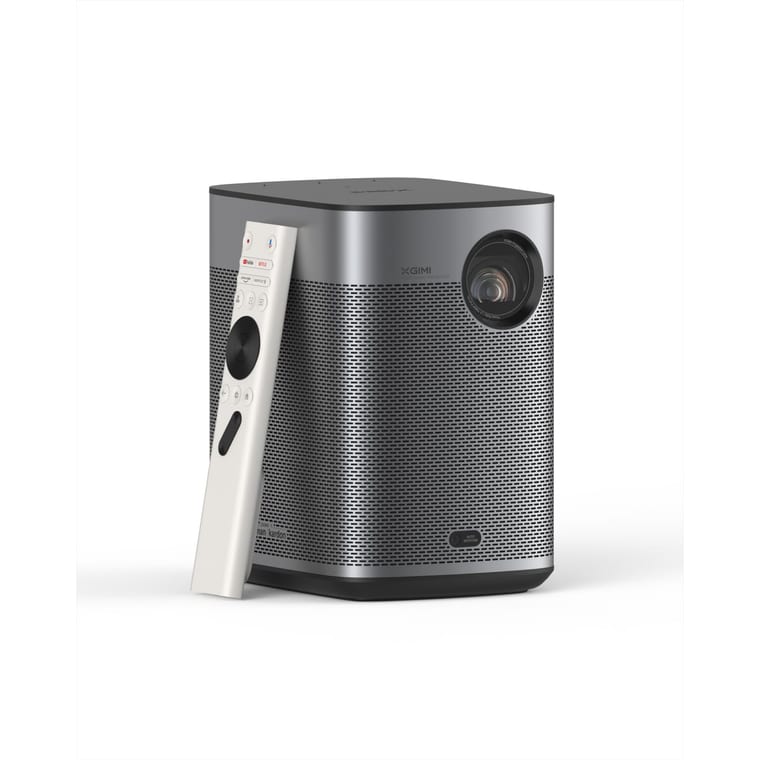
XGIMI Halo+
Battery powered native 1080p with Harman Kardon speakers built in.
~₹74,999Amazon.in
Check price →Around ₹74,999, rated 4.5 from 115 buyers.
A built-in battery, native 1080p and 700 ISO lumens. It runs for a couple of hours unplugged, which covers a film on a terrace or in a bedroom with no socket nearby.
Google TV is licensed here too, and the Harman Kardon speakers are good enough that you can skip a separate soundbar.
700 ISO lumens is a genuine measured figure. Treat it as a night-time projector.
- Buy it if you want to move it between rooms, or outdoors, without hunting for power.
- Skip it if it will live permanently on one shelf. The XGIMI Vibe One does that job for a third of the price.
Best 4K: BenQ GP520
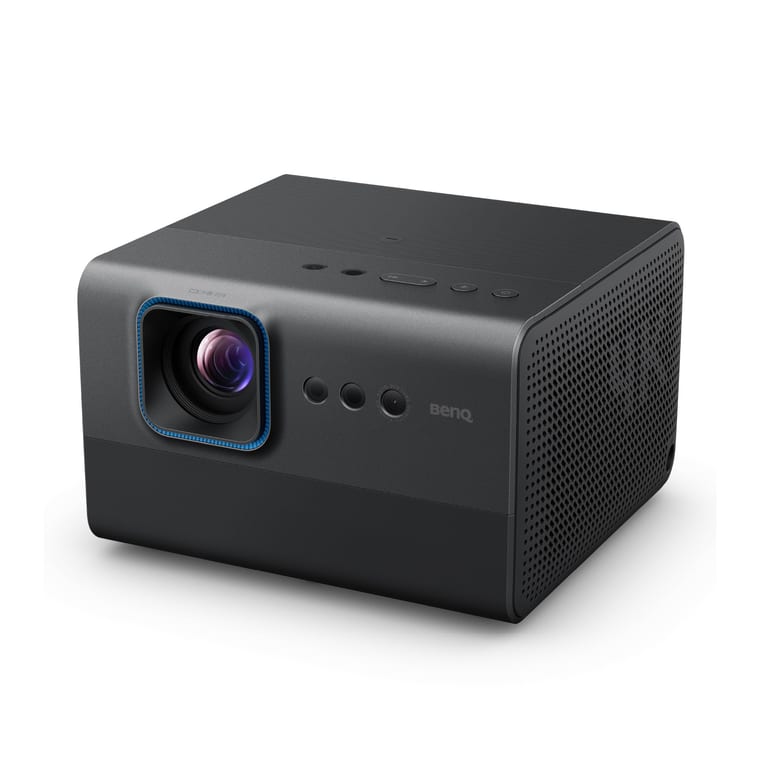
BenQ GP520
Genuine 3840 x 2160 and 2,600 ANSI lumens, bright enough for lamps on.
~₹1,24,990Amazon.in
Check price →Around ₹1,24,990, rated 4.3 from 97 buyers.
3840 x 2160 in the specification table, and 2,600 ANSI lumens, which is enough for a room with lamps on. This is the first projector here where a 120-inch picture still looks sharp close up.
The price is five times the XGIMI Vibe One. From a sofa three metres back, most people will see a smaller difference than the price gap suggests.
- Buy it if you want a genuine 4K picture and a projector that replaces a television.
- Skip it if this is your first projector. Start at ₹25,000 and find out how often you actually use it.
Most affordable: Portronics Beem 440
Around ₹5,899, rated 4.0 from 1,265 buyers, the largest review base on this page.
Its listing says 720p and its specification table agrees at 1280 x 720. In a category this loose with its numbers, that accuracy is worth something.
On a 60 to 80 inch wall in a dark room it is watchable. Push it to 100 inches and the softness shows.
- Buy it if you want to try a projector before spending real money.
- Skip it if you plan a 100-inch picture. Add ₹3,750 for the native 1080p Beem 450.
Business projectors are a different product
The Epson EB-E12 costs ₹26,979 and its specification table lists 1024 x 768. That is a lower resolution than the ₹5,899 Portronics.
It is not a bad projector. It is built for a different job: throwing a bright, readable slide onto a screen in a lit conference room, for thousands of hours, with a lamp you can replace.
Spreadsheets and slides need brightness and contrast. Films need resolution and colour. Buying a business projector for movie nights is one of the more expensive mistakes in this category, and the listings rarely make the distinction clear.
A quick way to tell them apart: a 1024 x 768 or 1280 x 800 chip, 3,000-plus lumens, a VGA port and a replaceable lamp all mean a business projector. Google TV, Netflix certification and native 1080p or 4K mean a home projector.
By that test the Epson EB-W06 recommended above is a business projector, and in a sunlit room that is exactly why it works. The trade is resolution, which is what brightness costs at this price.
What to check before you buy
- Read the specification table, not the title. Look for 1920 x 1080 rather than 1080p Support.
- Treat plain lumens with suspicion. ANSI and ISO are measured. A big number at a small price usually is not.
- Check whether Netflix is officially certified on the model you want, because certified projectors stream in HD while uncertified ones often cap at 480p or refuse to install altogether.
- Measure your throw distance. Most projectors need roughly 2.5 to 3 metres to fill 100 inches. Measure before you order.
- Budget for the wall. A plain white wall works. A ₹2,000 screen improves contrast more than a ₹5,000 step up in projector.
- Listen for the fan. Budget projectors are loud, and in a quiet scene you will hear it.
Which projector to buy
For most homes the answer is the XGIMI Vibe One at around ₹24,999. Native 1080p, licensed Netflix, and a 4.7 rating across 538 buyers that nothing else here matches.
On a smaller budget, the Portronics Beem 450 at ₹9,649 is real 1080p, which puts it ahead of the ₹9,999 models still running 720p chips.
If the room is bright, resolution matters less than light. Take the Epson EB-W06 and its 3,700 measured lumens.
Whatever you choose, check the two numbers first. Native resolution and ANSI lumens decide what you see on the wall, and both are easy to find once you stop reading the title.