Add TopTechs as a preferred source
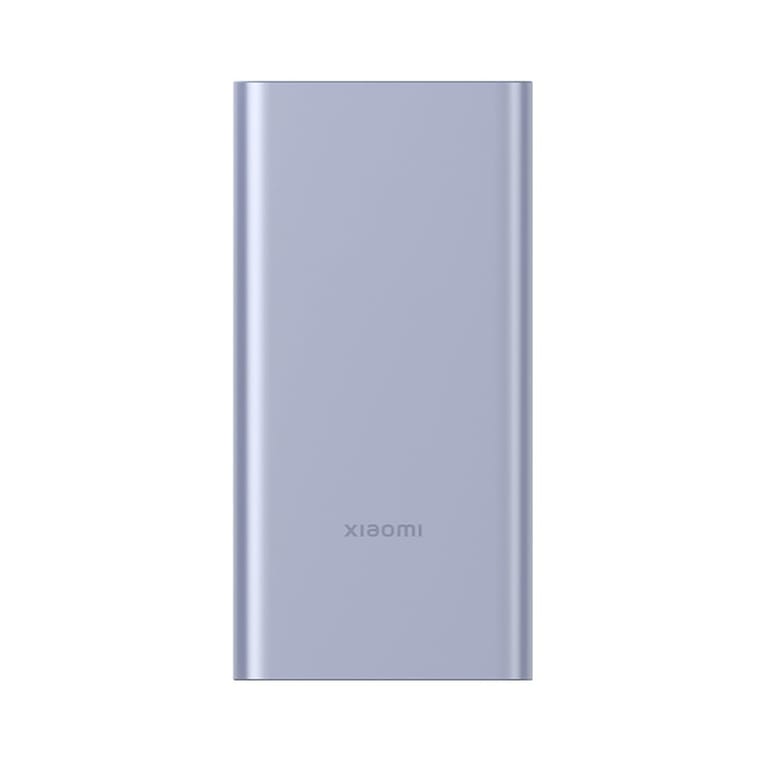
The best power bank for most people in India is the Xiaomi Power Bank 4i 20000mAh at around ₹2,299, rated 4.2 stars from more than 13,000 buyers. It carries two days of phone charge and pushes 33W, which is enough to fast-charge almost any Android phone sold here.
Before you pick one, there is a number on every box that does not mean what you think it means. It is the reason your 10,000mAh power bank never charges your phone twice.
Quick answer
- Best overallXiaomi Power Bank 4i 20000mAh, around ₹2,299
- Best under ₹1,000Portronics Luxcell B, around ₹849
- Best magnetic for iPhoneboAt EnergyShroom PB331, around ₹1,699
- Best 20000mAh valueboAt EnergyShroom PB400 Pro, around ₹1,899
- Best for a laptopUGREEN Nexode 100W, around ₹7,649
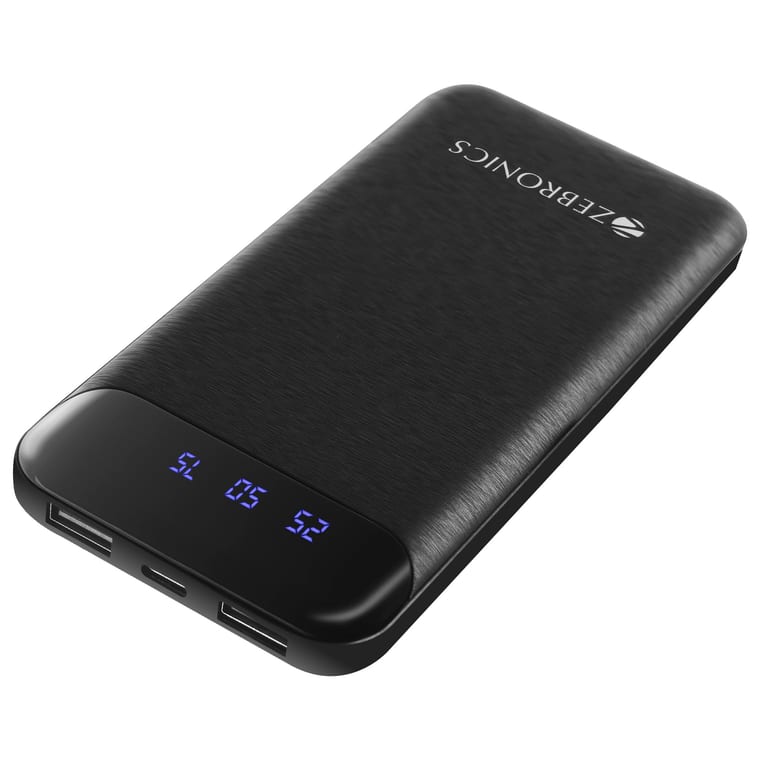
- Most affordableZEBRONICS MB10000S4, around ₹599
Prices, ratings and review counts checked October 2026 on Amazon.in. Tap any name for the live price.
Best power banks in India: quick comparison
Sorted by price. Capacity is the printed figure. The real output column shows what actually reaches your phone once conversion losses are taken off, which the next section explains.
| Power bank | Price | Capacity | Real output | Max watts | Rating |
|---|---|---|---|---|---|
| ~₹599 | 10,000mAh | ~6,200mAh | 12W | 3.7 (1,436) | |
| ~₹849 | 10,000mAh | ~6,200mAh | 22.5W | 4.0 (3,873) | |
| ~₹1,399 | 10,000mAh | ~6,200mAh | 22.5W | 4.1 (1,647) | |
| ~₹1,699 | 10,000mAh | ~4,500mAh wireless | 22.5W wired | 4.0 (3,377) | |
| ~₹1,749 | 10,000mAh | ~4,500mAh wireless | 20W wired | 3.9 (9,854) | |
| ~₹1,899 | 20,000mAh | ~12,600mAh | 22.5W | 4.1 (2,720) | |
| ~₹2,299 | 20,000mAh | ~12,600mAh | 33W | 4.2 (13,374) | |
| ~₹3,699 | 20,000mAh | ~12,600mAh | 65W | 4.1 (420) | |
| ~₹7,649 | 20,000mAh | ~12,600mAh | 100W | 4.5 (5,559) |
Why a 10,000mAh power bank never gives your phone 10,000mAh
A 10,000mAh power bank delivers roughly 6,000 to 6,500mAh to your phone. Not 10,000. The rest is lost before it reaches you, and no brand prints this on the box.
The reason is voltage. The cells inside a power bank run at 3.7 volts. Your phone charges over USB at 5 volts or higher. Converting between the two costs energy.
Here is the arithmetic for a 10,000mAh bank:
- 10,000mAh at 3.7V stores 37 watt-hours of energy.
- Delivered at 5V, that is 7,400mAh in theory.
- Conversion runs at about 85 to 90 percent, so you actually get 6,000 to 6,600mAh.
Most phones sold in India now carry a 5,000mAh battery. So a 10,000mAh power bank covers one full charge and about a quarter of a second one. A 20,000mAh bank gives you about 12,600mAh, which is two full charges and a little spare.
This is not a defect and it is not a scam. Every power bank on earth works this way, including the expensive ones. But it does change which size you should buy.
If you want two genuine phone charges away from a socket, buy 20,000mAh. If you want a topping-up device for a day out, 10,000mAh is right.
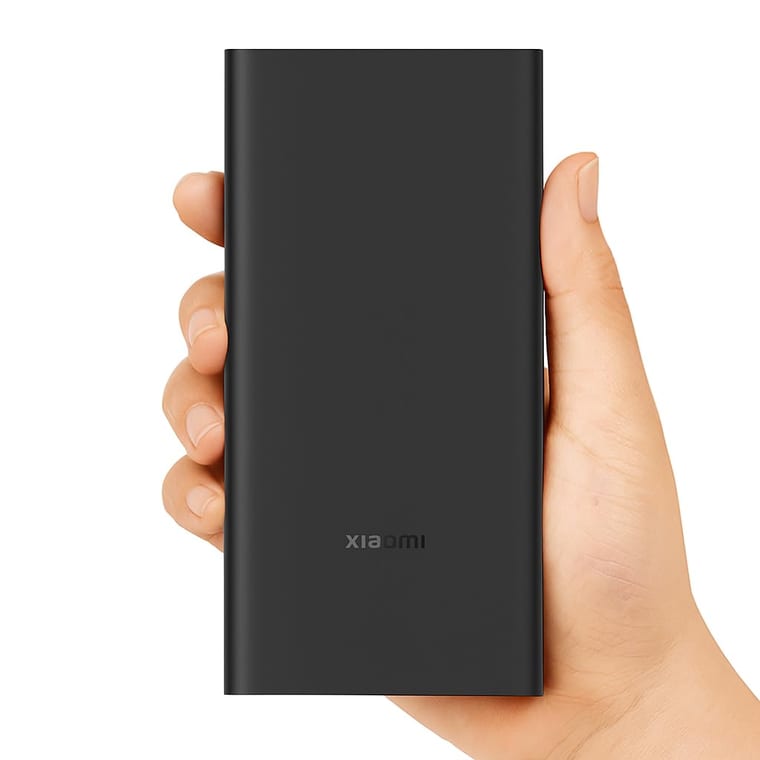
Best power bank overall: Xiaomi Power Bank 4i 20000mAh
Xiaomi Power Bank 4i 20000mAh
Two real phone charges at 33W, with 13,374 ratings behind it.
~₹2,299Amazon.in
Check price →Around ₹2,299, rated 4.2 from 13,374 buyers. That is the largest review base of any power bank here by a wide margin.
Two full phone charges, 33W output, and a price that undercuts most 20,000mAh rivals. The 33W is the point where a Redmi, Realme or Poco phone switches into fast-charge mode instead of charging slowly.
It charges itself back up in about four hours, and it can run two devices at once without either one dropping to a crawl.
It is a brick. At roughly 430 grams it lives in a bag.
- Buy it if you want two real charges and the best evidence of reliability on this page.
- Skip it if you need something pocketable. The 10,000mAh Xiaomi in the table above costs around ₹1,399.
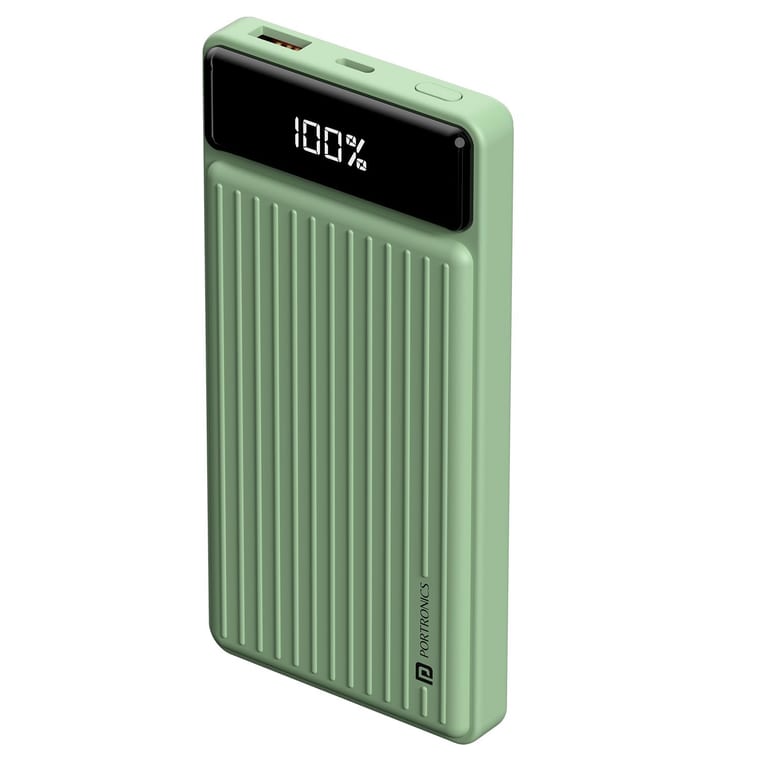
Best power bank under ₹1,000: Portronics Luxcell B
Portronics Luxcell B
22.5W and USB-C both ways, for well under a thousand rupees.
~₹849Amazon.in
Check price →Around ₹849, rated 4.0 from 3,873 buyers.
At the budget end, this is the one worth buying. For ₹250 more than the Zebronics you get 22.5W instead of 12W, which nearly doubles charging speed, and a rating that is a full three tenths higher.
It has USB-C in and out, so one cable does everything. At this price many rivals still use micro-USB for input, which means carrying a second cable you will lose.
- Buy it if you want the best power bank under ₹1,000 and you are charging a phone.
- Worth knowing: 22.5W is fast for a phone, but it will not meaningfully charge a laptop.
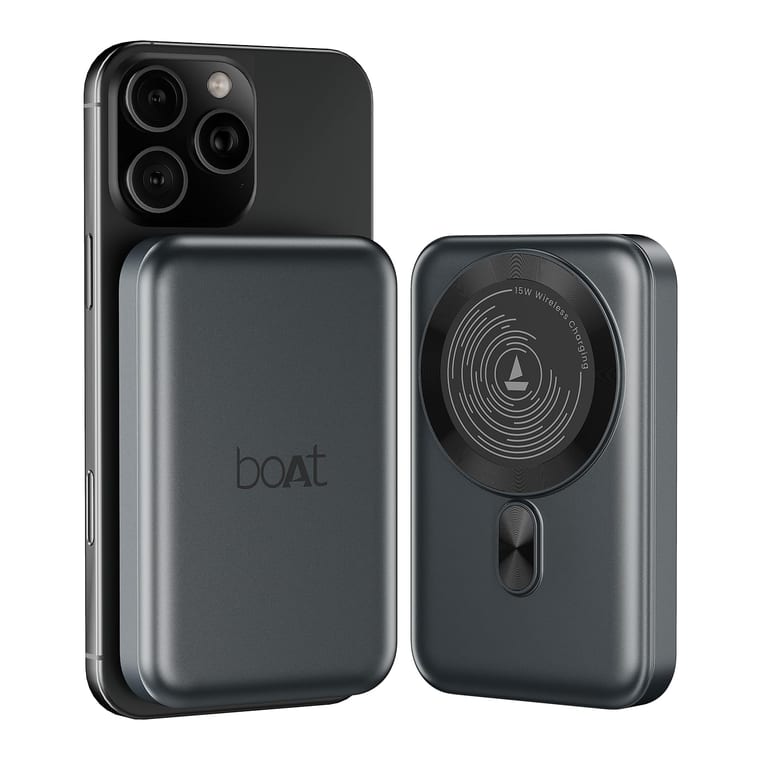
Best magnetic power bank for iPhone: boAt EnergyShroom PB331
boAt EnergyShroom PB331
Clips magnetically to an iPhone 12 or newer, no cable needed.
~₹1,699Amazon.in
Check price →Around ₹1,699, rated 4.0 from 3,377 buyers.
It clamps to the back of an iPhone 12 or newer and charges with no cable at all. You can keep using the phone while it is attached, which is the whole appeal.
The magnets are strong enough to hold through a thin case. Through a thick rugged case they are not, and the bank slides off.
Magnetic charging wastes about 30 percent of the power on the way to your phone, and the listing does not mention it.
- Buy it if you own a recent iPhone and you want to stop carrying a cable.
- Skip it if you use a thick case, or your phone has no magnets in the back.
- Worth knowing: it also has a USB-C port, so you can charge your phone the fast, wired way when speed matters.
What magnetic and MagSafe power banks really cost you
Charging wirelessly throws away about another 30 percent on top of the conversion loss. Magnetic power banks are convenient. They are not efficient.
Stack the two losses and the numbers get uncomfortable:
- A 10,000mAh magnetic bank holds 37 watt-hours, same as any other.
- Used over the cable, you get roughly 6,200mAh.
- Used magnetically, you get roughly 4,300 to 4,700mAh.
An iPhone 16 has a 3,561mAh battery, so a magnetic bank gives you about one and a quarter charges. An iPhone 16 Pro Max at 4,685mAh gets slightly less than one full charge.
The energy does not vanish quietly either. It turns into heat, so the back of your phone gets warm and magnetic charging runs slower.
None of this makes magnetic banks a bad buy. Not carrying a cable is worth something. But buy one knowing it is a convenience device, and use the USB-C port when you actually need the phone full in a hurry.
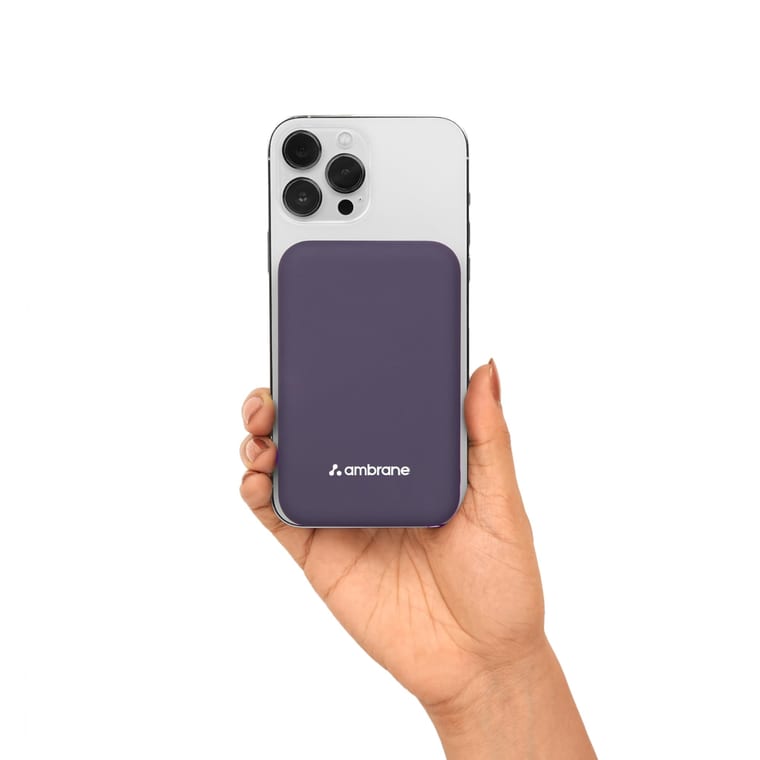
Both magnetic banks here, the boAt and the Ambrane Magnetic Wireless, have that port. The Ambrane has far more reviews at 9,854, though its 3.9 rating sits just below the boAt.
Best 20000mAh value: boAt EnergyShroom PB400 Pro
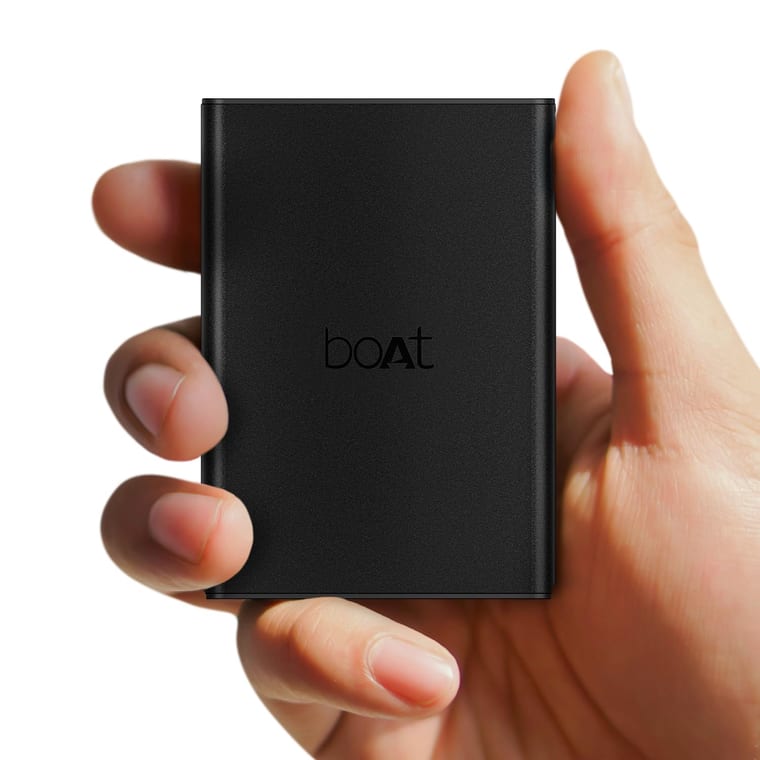
boAt EnergyShroom PB400 Pro
20,000mAh for under two thousand rupees, at 22.5W.
~₹1,899Amazon.in
Check price →Around ₹1,899, rated 4.1 from 2,720 buyers.
Two full phone charges for under two thousand rupees. It charges at 22.5W instead of the Xiaomi's 33W, and costs ₹400 less.
For most phones that difference costs you perhaps fifteen minutes on a full charge. If you charge overnight or while working, you will never notice it.
- Buy it if you want 20,000mAh for the lowest sensible price.
- Worth knowing: the Xiaomi above has five times the reviews for ₹400 more. If that reassurance is worth ₹400 to you, take the Xiaomi.
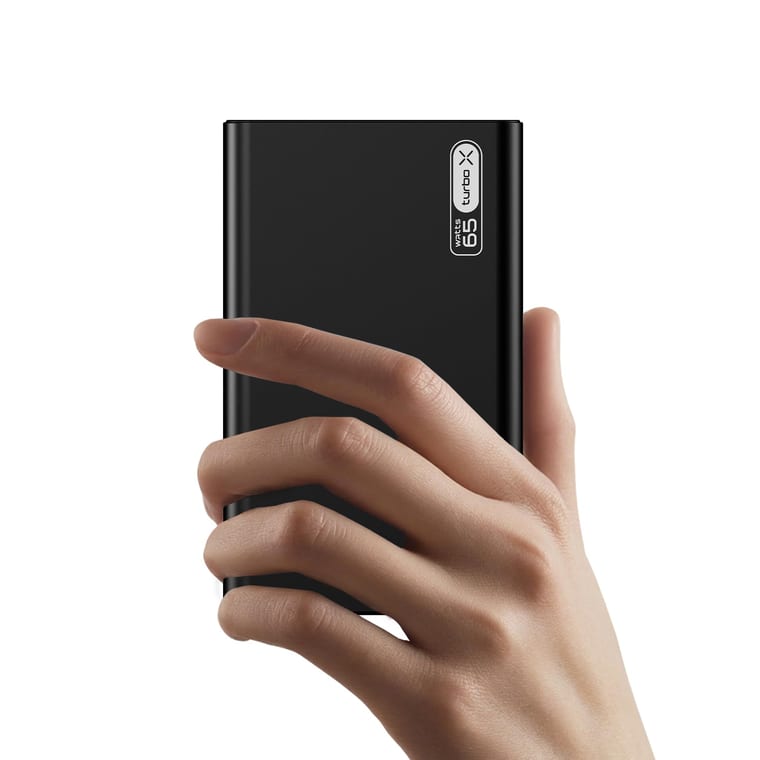
Best for fast charging: boAt PB465 Turbo X
Around ₹3,699, rated 4.1 from 420 buyers.
65W is where a power bank becomes useful for more than phones. It will charge a MacBook Air, most thin Windows laptops, a Nintendo Switch and an iPad at close to their full speed.
It also refills itself quickly, which is the quiet benefit of high-wattage banks. A 20,000mAh bank at 22.5W takes most of a working day to fill. This one does it in around two and a half hours.
- Buy it if you carry a laptop and want one bank for everything.
- Worth knowing: only 420 ratings so far. It is a newer product than most here, so there is less evidence behind it.
Best for a laptop: UGREEN Nexode 100W
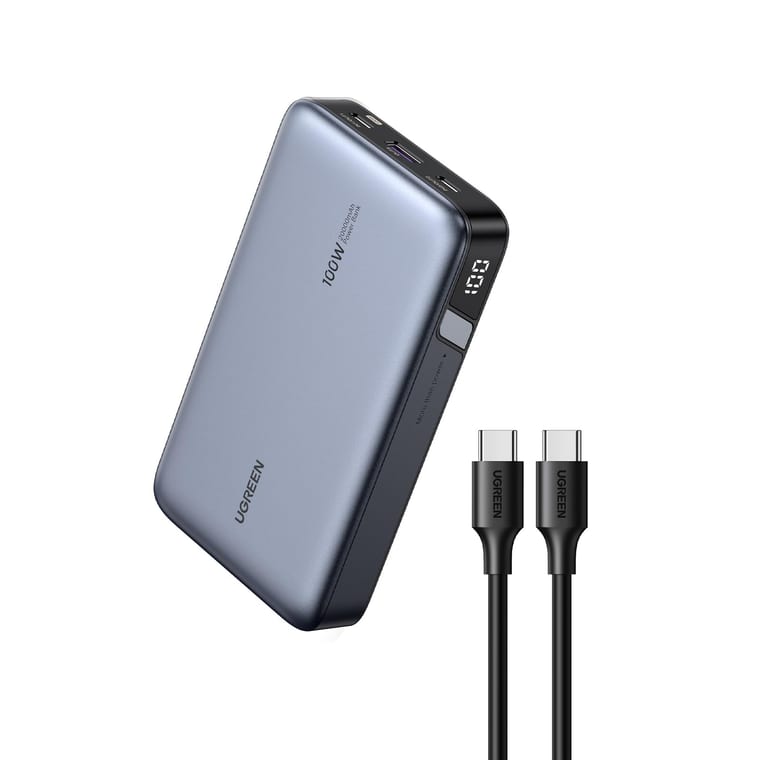
UGREEN Nexode 100W
Full-speed laptop charging and the highest rating here at 4.5.
~₹7,649Amazon.in
Check price →Around ₹7,649, rated 4.5 from 5,559 buyers, the highest score on this page.
100W is full laptop charging speed. A 14-inch MacBook Pro, a Dell XPS, a gaming laptop on battery saver: it charges each at the same rate as the charger in the box.
It shows the exact percentage left. Cheaper banks give you four small lights and leave you guessing. Three ports let you run a laptop, a phone and earbuds together.
The price is three times the Xiaomi. You are paying for the wattage and for UGREEN's build quality, and the 4.5 rating across 5,559 buyers suggests both hold up.
- Buy it if you need to charge a real laptop away from a socket.
- Skip it if you only ever charge a phone. You are paying a large premium for watts you cannot use.
Most affordable: ZEBRONICS MB10000S4
Around ₹599, rated 3.7 from 1,436 buyers. That is the lowest rating here, and the charging speed is why.
At 12W this charges slowly. A phone that fills in 70 minutes on its own charger will take close to three hours on this. For an emergency bank kept in a drawer or a car, that is fine.
It does the basic job, it is from a brand with service in India, and it costs less than a cab ride.
- Buy it if you want a spare for emergencies and ₹599 is the budget.
- Skip it if this is your main power bank. The Portronics at ₹849 is a far better device for ₹250 more.
How many watts do you actually need
Wattage decides speed. More is not always worth paying for, because a device will only draw what it can take.
- 10W to 12W. Slow. Fine overnight or for an emergency bank. Three hours for a phone.
- 20W to 22.5W. The right choice for nearly everyone. Most Android phones and all iPhones hit their full speed here.
- 33W. Useful if you own a Redmi, Realme, Poco, iQOO or OnePlus phone that supports it. Shaves fifteen to twenty minutes off a full charge.
- 65W. The entry point for laptops and tablets.
- 100W. Full speed for any laptop that charges over USB-C.
One caveat that costs people money: your cable has to match. A 100W bank with a cheap cable rated for 60W will charge at 60W. The cable is the limit, and most people never check it.
What to check before you buy
- Buy 20,000mAh if you want two charges. After conversion losses, 10,000mAh is roughly one and a quarter phone charges.
- Check the input port. USB-C in means one cable for everything. Micro-USB input means carrying a second cable.
- Airlines cap you at 100 watt-hours. A 20,000mAh bank is 74Wh, so it flies. Anything above 27,000mAh does not. Every power bank must go in hand baggage, never in checked bags.
- Count the ports. Two output ports is the practical minimum if you travel with anyone.
- Ignore the number of dots. Four LEDs tell you almost nothing. A percentage display is worth paying a little for.
Which power bank to buy
For most people the answer is the Xiaomi Power Bank 4i 20000mAh at around ₹2,299. Two real charges, fast enough for any phone, and more buyer evidence behind it than anything else here.
Spending less, take the Portronics Luxcell B at ₹849 rather than the ₹599 option. The extra ₹250 nearly doubles the charging speed.
If you carry a laptop, the UGREEN Nexode 100W is the one to own, and its 4.5 rating is the highest here.
Whichever you choose, judge it by the real output rather than the printed number. A 10,000mAh bank is a top-up. A 20,000mAh bank is a weekend.