Add TopTechs as a preferred source
A fitness band in the truest sense has no screen at all — it sits on your wrist, records heart rate, sleep and movement, and shows you nothing until you open your phone. That is the point: no notifications, no glancing, no charging every second day. The best screenless fitness tracker in India is the Google Fitbit Air at around ₹15,700, and the best-rated of any kind is the Ultrahuman Ring AIR at ₹28,499. This guide covers every budget from ₹2,849 upward — and is honest about the tier where the options are genuinely poor.
Quick answer: Cheapest screenless → Pebble Qore (₹2,849). Best budget screenless → CrossBeats Vector (₹3,999). Best screenless band → Google Fitbit Air (₹15,700). Best overall, any shape → Ultrahuman Ring AIR (₹28,499, no subscription). Serious training → Whoop 5.0 (₹28,990). Want a small screen? → Huawei Band 11 (₹4,599).
Prices, ratings and review counts checked September 2026 on Amazon.in. Tap any name for the live price.
A straight warning about the cheap end
We need to say this before the recommendations, because it decides whether you should buy at all. The sub-₹4,000 screenless band market in India is weak. It is dominated by names you will not recognise — Pebble, AILKIN, FYFIT, Zavyoo, BYDEE — all promising "45 days battery" and "100+ sports modes", and most sitting between 2.9 and 3.9 stars.
Nothing under ₹4,000 in this category earns a confident recommendation. The genuinely good screenless trackers start at about ₹13,000. If your budget is closer to ₹4,000 and you want something reliable, a small-screen band like the Huawei Band 11 is the honest answer even though it is not screenless. We would rather tell you that than sell you a 3.6-star band.
Best screenless fitness trackers in India: quick comparison
Sorted by price. Ratings and review counts are from the Amazon.in listing, checked September 2026.
| Tracker | Price | Type | Best for | Battery | Rating |
|---|---|---|---|---|---|
| ~₹2,849 | Screenless band | Cheapest screenless | Quoted 45 days | 3.6 (568) | |
| ~₹3,390 | Screenless band | Adds HRV + temp | Quoted 45 days | 3.6 (650) | |
| ~₹3,999 | Screenless band | Best budget screenless | Quoted 45 days | 3.9 (70) | |
| ~₹3,999 | Small screen | Value if you allow a screen | ~14 days | 4.0 (3,458) | |
| ~₹4,599 | Small screen | Best under ₹5,000 | ~14 days | 4.4 (670) | |
| ~₹13,883 | Smart ring | Best value ring | ~6 days | 3.9 (967) | |
| ~₹15,700 | Screenless band | Best screenless band | Multi-day | 4.1 (104) | |
| ~₹28,499 | Smart ring | Best overall, no subscription | ~6 days | 4.4 (1,795) | |
| ~₹28,990 | Screenless strap | Serious training | ~14 days | 4.1 (2,488) | |
| ~₹44,750 | Screenless strap | Adds ECG | ~14 days | 4.1 (68) |
Best screenless fitness band under ₹5,000
Read the warning above first. Everything in this bracket is a compromise — useful for step counts and sleep trends, not for training decisions. These are the two least-bad options, chosen on review volume and rating rather than spec sheets.
Pebble Qore — cheapest screenless fitness band
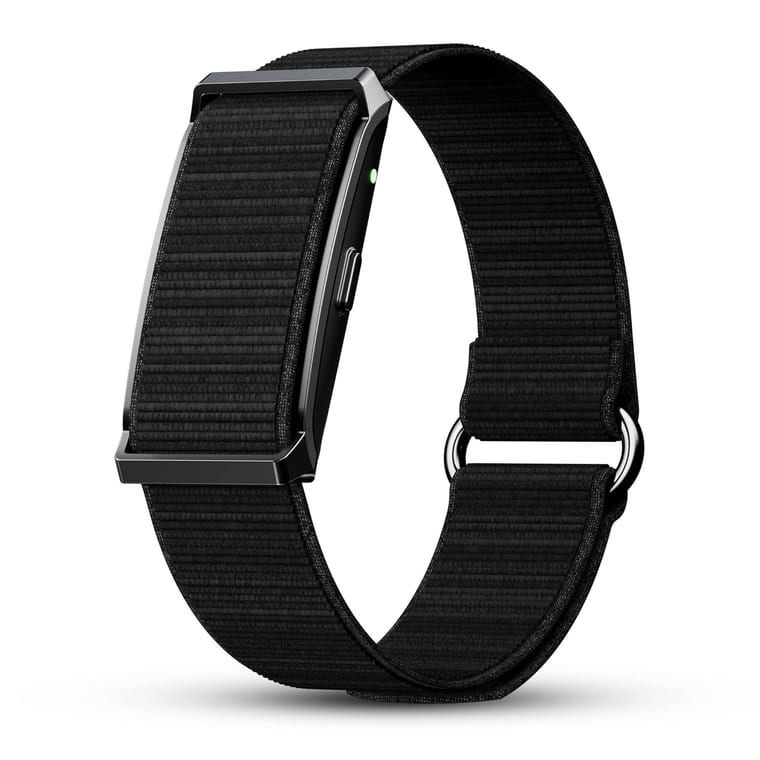
Around ₹2,849, rated 3.6 from 568 buyers. This is the classic screenless shape: a slim band with no display, 45 days of quoted battery and heart-rate, SpO2 and sleep tracking read through the Pebble app. It is the cheapest way into the category.
Buy it if: you specifically want no screen and your budget is firm at under ₹3,000.
Be realistic: 3.6 stars is mediocre. Reviewers report app sync problems and optimistic battery claims. Treat the data as a rough trend.
CrossBeats Vector — best budget screenless band
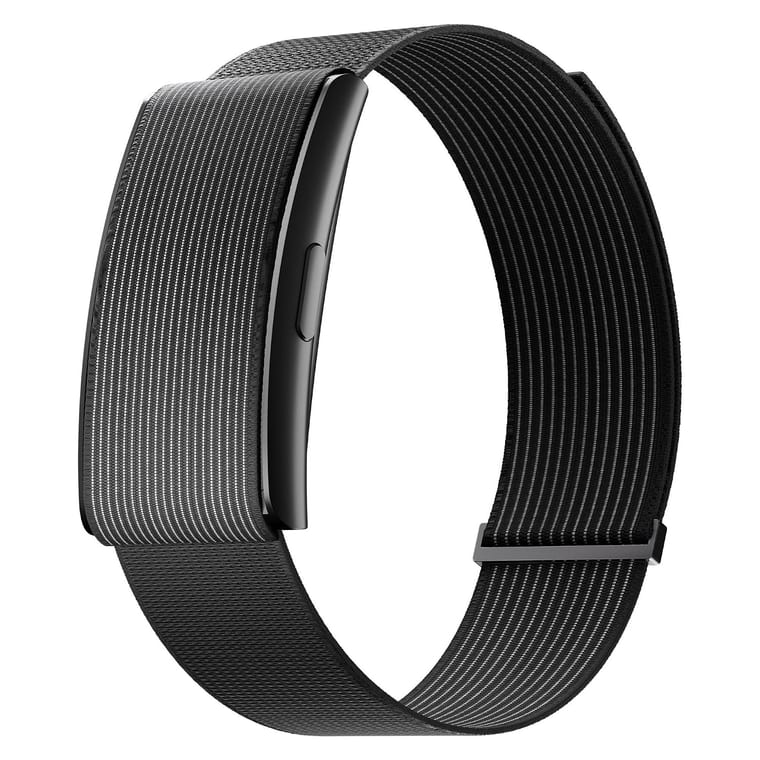
About ₹3,999, rated 3.9 — the highest rating in the budget screenless tier. It adds 5ATM water resistance, so unlike most bands at this price you can actually swim with it, plus HRV and SpO2.
Buy it if: you want screenless and swim-proof without spending five figures.
Note: only 70 ratings so far, so there is less evidence behind it than the Pebble.
Pebble Qore 2 — more sensors, same caveats
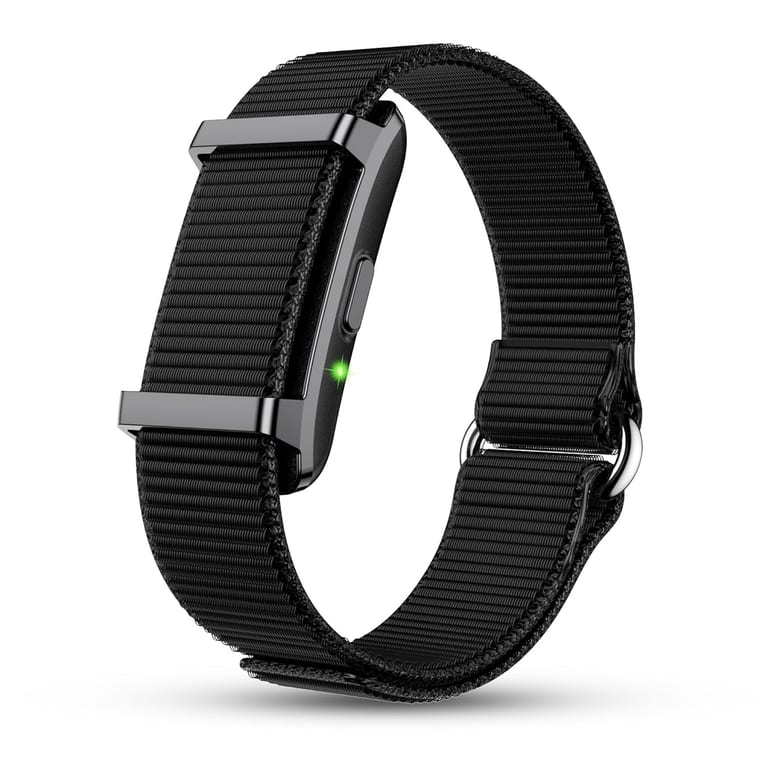
Around ₹3,390, rated 3.6 from 650 buyers. Adds HRV and body-temperature monitoring over the original Qore. The extra sensors are interesting on paper; the same reliability caveats apply.
Best screenless fitness tracker under ₹20,000
This is where the category becomes genuinely good. You are paying for sensors that hold up and software that interprets the data rather than just listing it.
Gabit Smart Ring — best value smart ring
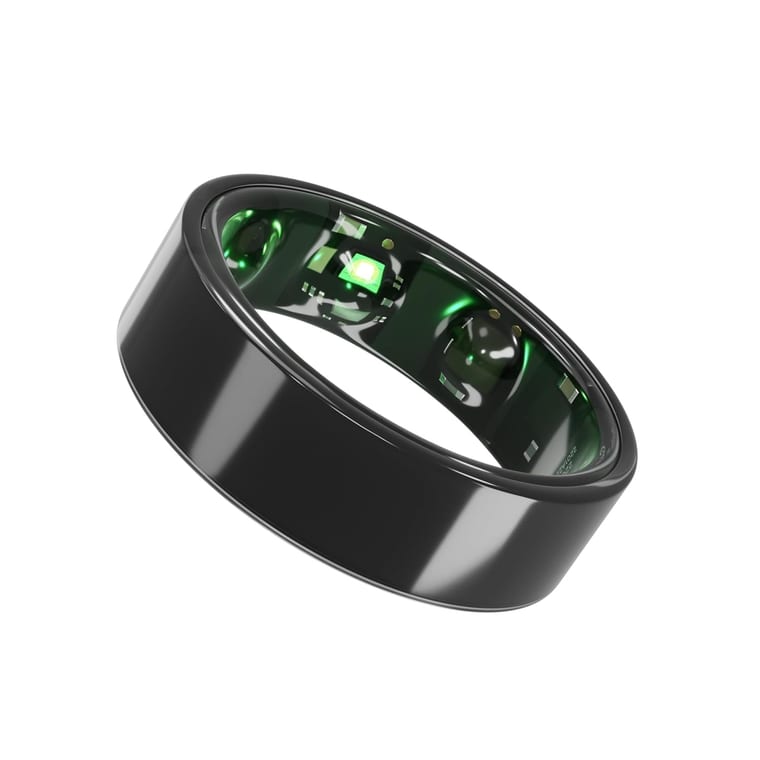
About ₹13,883, rated 3.9 from 967 buyers. A smart ring is a screenless tracker in the purest form — you genuinely forget you are wearing it, and it is far more comfortable in bed than any wrist band. Gabit is an Indian brand tracking sleep, stress, HR and activity.
Buy it if: you want ring comfort without Ultrahuman money.
Google Fitbit Air — best screenless fitness band
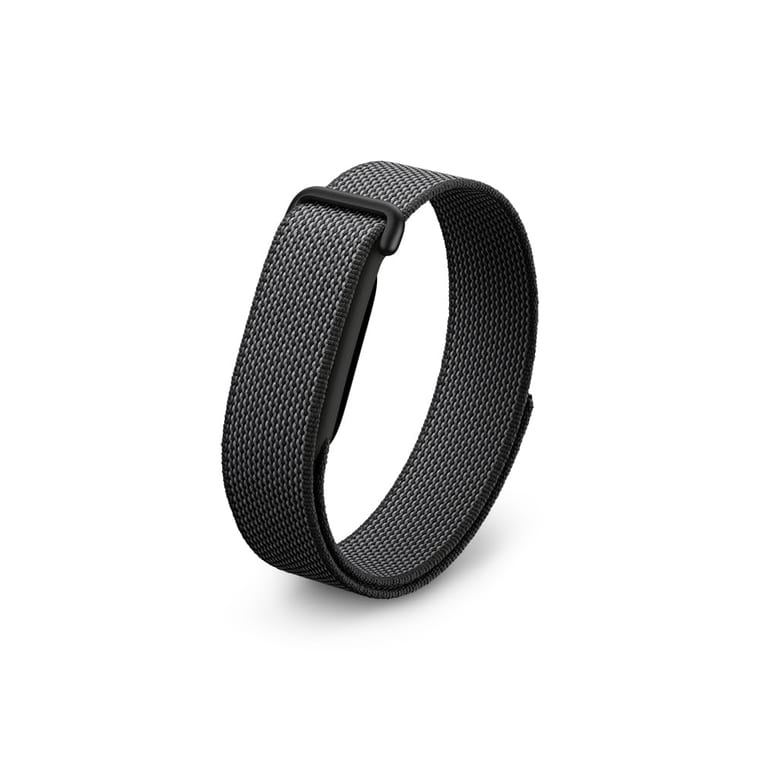
Around ₹15,700, rated 4.1. This is the screenless band done properly by a company that has spent fifteen years on the sensors. No display at all: heart rate, activity and sleep go straight to the Fitbit app, whose sleep scores and readiness insights remain the best in the business at explaining what your numbers mean.
Buy it if: you want the classic screenless wrist band and you want it to actually work.
Be aware: Fitbit's deeper insights sit behind a Premium subscription. Budget for it.
Best premium screenless tracker
At this level you are buying a coaching system, not a pedometer. Both options below are worn continuously and judged on what their software tells you to do.
Ultrahuman Ring AIR — best screenless tracker overall
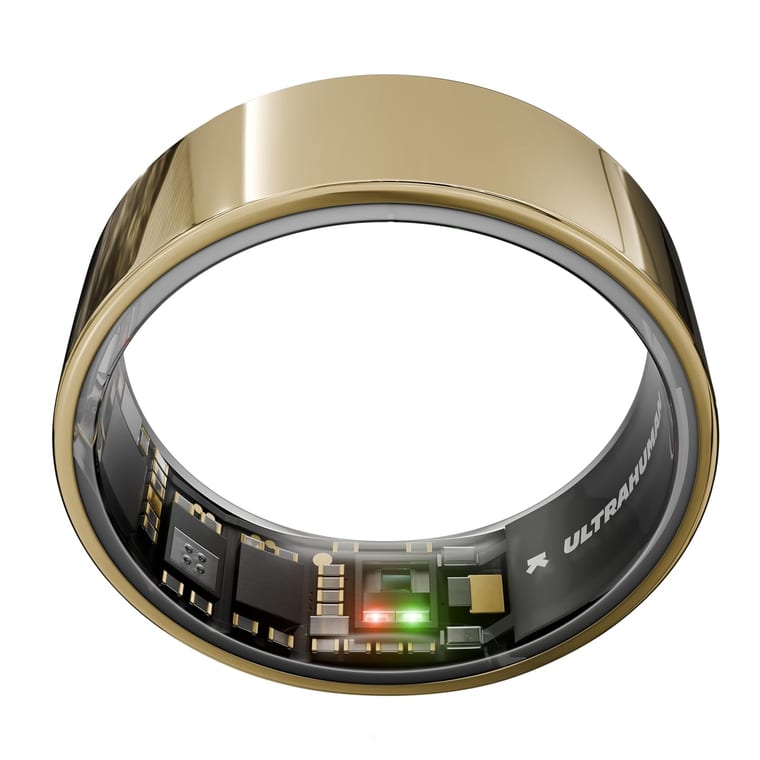
About ₹28,499 and rated 4.4 from 1,795 buyers — the best rating, on the largest review base, of any screenless tracker in this guide. Raw titanium, about 6 days per charge, and detailed sleep, HRV, recovery and movement tracking.
The decisive detail: no subscription. Ultrahuman charges once for the hardware and the app stays free, which over three years makes it dramatically cheaper than Whoop. It is also an Indian company, so support and replacements are local.
Buy it if: you want the best screenless tracking available in India and no recurring bill.
Check first: rings need sizing — order the ₹49 sizing kit before the ring.
Whoop 5.0 — best for serious training
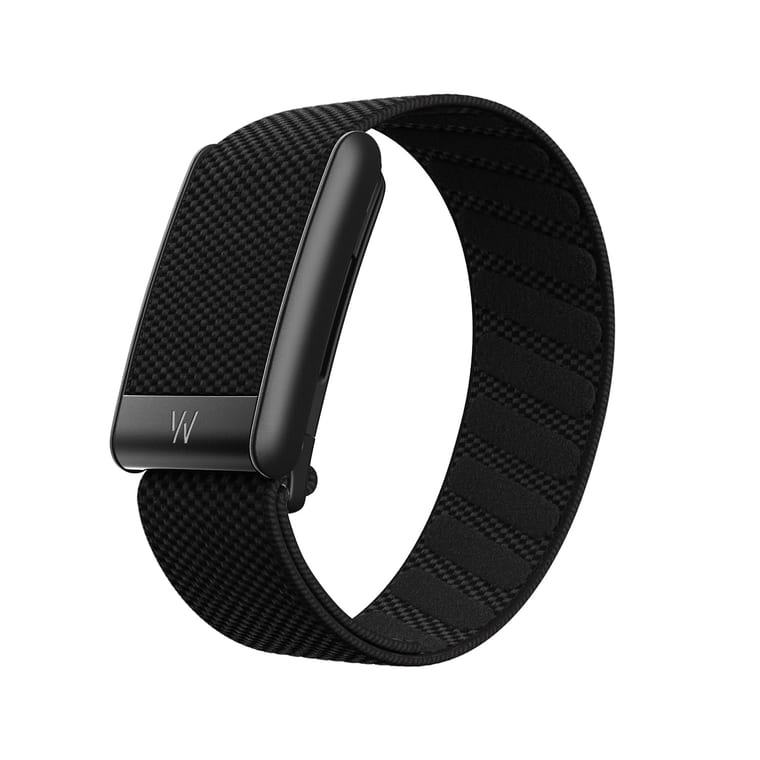
Around ₹28,990 including 12 months of membership, rated 4.1 from nearly 2,500 buyers. Whoop invented this category: a screenless strap that measures strain and recovery, then tells you each morning whether to train hard or back off. Athletes rate it above everything else for exactly that.
Understand the model: Whoop is a subscription. When the included year ends you keep paying or the hardware stops being useful. Over three years that costs far more than the Ultrahuman.
Whoop MG — the top of the range
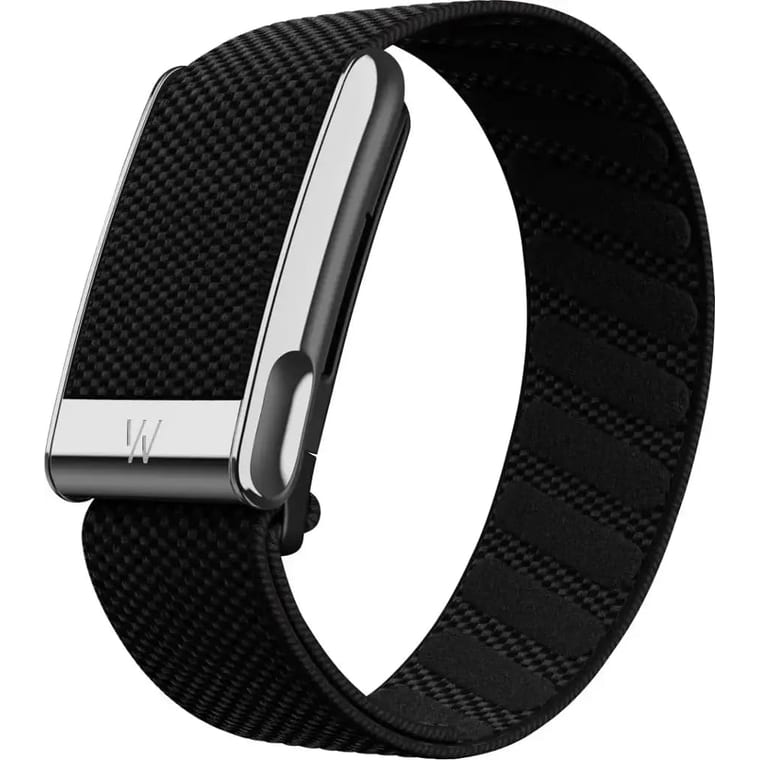
About ₹44,750 with 12 months included, rated 4.1. Adds medical-grade features including ECG and blood-pressure insights on top of the standard Whoop platform. For most people this is more than they need; for anyone tracking a heart concern alongside training, it is the reason to pick it.
If you will accept a small screen
You asked for screenless, and the honest truth is that the reliable screenless options start at around ₹13,000. If your budget is under ₹5,000, a small-screen band beats every screenless band at the same price on accuracy and build. These two are the exceptions worth breaking the rule for.
Huawei Band 11 — best small-screen band
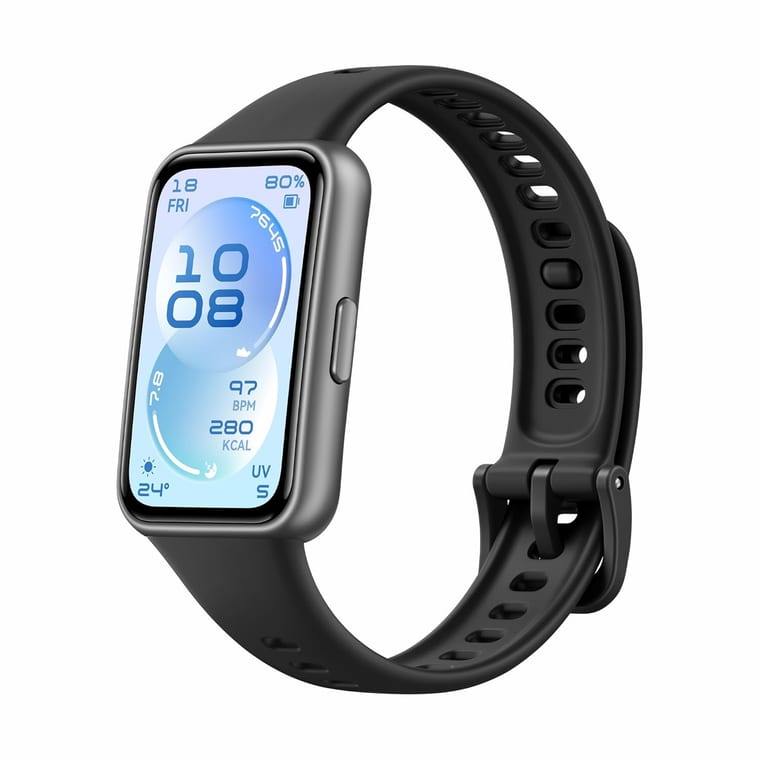
About ₹4,599, rated 4.4 from 670 buyers. Slim enough to sleep in, roughly two weeks per charge, and Huawei's TruSeen sensors are far ahead of anything screenless at this price. The small AMOLED is there when you want the time and off the rest of the day.
Huawei Band 10 — the value option
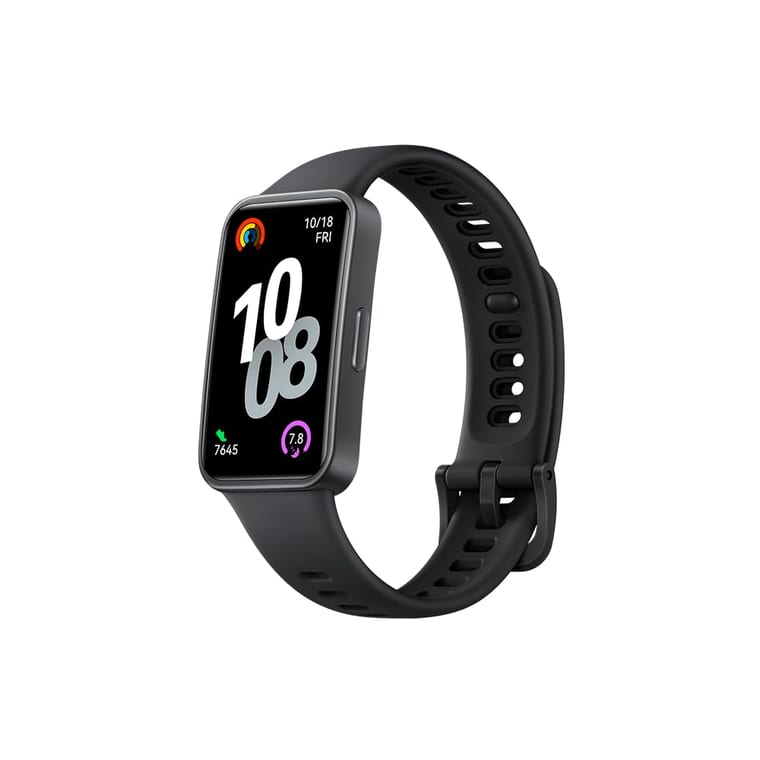
Around ₹3,999, rated 4.0 from over 3,400 buyers — the largest review base of any band here. Nearly everything the Band 11 offers for ₹600 less.
How to choose: what actually matters in a fitness band
Still deciding? Everything below explains the shapes, the sensors and the running costs — including the one line item most buyers miss until the bill arrives.
Screenless band vs smart ring vs smartwatch
All three track the same basic things. They differ in what you give up. A screenless band is the least distracting and lasts longest; a smart ring is the most comfortable to sleep in; a smartwatch shows you everything but needs charging constantly. Pick by how you want to interact with it, not by sensor count.
| Screenless band | Smart ring | Smartwatch | |
|---|---|---|---|
| Battery | 7–45 days | 4–7 days | 1–7 days |
| Distraction | None | None | Constant |
| Comfort in bed | Good | Best | Poor |
| Check data | Phone only | Phone only | On wrist |
| Sizing | One size | Must measure first | One size |
| Gym weights | Fine | Awkward on bars | Fine |
| Typical price | ₹2,800–29,000 | ₹13,000–29,000 | ₹1,200–40,000 |
One practical warning about rings: lifting weights with a titanium ring on is uncomfortable and can mark the band. Most ring owners take it off for the gym — which defeats the point if the gym is your main activity.
The subscription trap
This is the single most expensive mistake in this category. Some screenless trackers charge once; others charge every month, and the monthly ones are cheaper on day one and far more expensive by year three.
| Tracker | Upfront | Ongoing | Rough 3-year cost |
|---|---|---|---|
| Ultrahuman Ring AIR | ~₹28,499 | None | ~₹28,499 |
| Google Fitbit Air | ~₹15,700 | Premium optional | ₹15,700 + Premium |
| Whoop 5.0 | ~₹28,990 (yr 1 inc.) | Required | Considerably more |
None of this makes Whoop a bad product — its coaching is the best there is. Just price three years, not one.
Heart rate, SpO2 and sleep: what is accurate and what is not
Every tracker here shines light into your skin and measures the reflection. That works well at rest and degrades as you move. Resting heart rate and sleep duration are genuinely accurate; SpO2 and calorie burn are not. Trust the trend, not the individual number.
- Resting heart rate — reliable everywhere. A rising resting rate across several days is a real signal you are run down.
- Sleep duration — accurate. Sleep stages are estimates; only a lab measures those.
- HRV — the basis of every "recovery score". Useful compared against your own baseline, meaningless compared against someone else's.
- SpO2 — a trend indicator, not a medical reading. No consumer tracker is a pulse oximeter.
- Calories — the least accurate figure on the device, often out by 20–30%. Never eat it back.
- Steps — accurate within a few percent. Rings undercount slightly because your hand is not always swinging.
Mistakes people make buying a screenless tracker
- Buying the cheapest screenless band you can find. Under ₹4,000 the sensors and apps are unreliable — a small-screen band from a real brand beats them.
- Believing "45 days battery". That assumes minimal heart-rate sampling. Expect a fraction of it with continuous monitoring on.
- Ignoring the subscription. Whoop's hardware is useless without it. Price three years.
- Ordering a ring without the sizing kit. Rings are not adjustable. Order the kit first — it is about ₹49 and saves a return.
- Counting sports modes. "100+ sports modes" is 100 labels on one accelerometer.
- Expecting medical accuracy. These are wellness devices. For a diagnosed condition, use a medical device.
Frequently asked questions
What is a screenless fitness tracker?
A screenless fitness tracker is a band or ring with no display at all. It records heart rate, sleep, movement and often SpO2, and you view everything in a phone app. The advantages are much longer battery life, a slimmer and more comfortable device, and no notifications pulling your attention.
Which is the best screenless fitness band in India?
The Google Fitbit Air at around ₹15,700 is the best screenless wrist band, combining reliable sensors with the clearest app. If you will consider a ring instead, the Ultrahuman Ring AIR at ₹28,499 is rated higher (4.4 from 1,795 buyers) and charges no subscription.
Are cheap screenless fitness bands under ₹3,000 any good?
Not really. That tier is dominated by unknown brands rated between 2.9 and 3.9, with common complaints about app syncing and exaggerated battery claims. The Pebble Qore at about ₹2,849 is the most-reviewed option, but at 3.6 stars it is the least-bad choice rather than a good one.
Is a smart ring better than a fitness band?
For sleep tracking and all-day comfort, yes — you genuinely forget a ring is there. For gym work it is worse, because a metal ring is uncomfortable against bars and dumbbells. Rings also need sizing before you order, and cost more for the same sensors.
Do screenless fitness trackers need a subscription?
Some do. Whoop is subscription-only and the hardware stops being useful when you stop paying. Fitbit works without Premium but holds its best insights behind it. Ultrahuman charges once for the ring with no ongoing fee, which makes it the cheapest premium option over three years.
How long does a screenless fitness band battery last?
Genuinely longer than a smartwatch, because there is no display to power. Expect 6 to 7 days from a smart ring, 10 to 14 days from a good screenless band, and treat any "45 day" claim as a best case with most sensors turned down.
The bottom line
If you want a true screenless fitness band, the Google Fitbit Air at around ₹15,700 is the one to buy — real sensors, the best app, no display to distract you. If you will wear a ring instead, the Ultrahuman Ring AIR at ₹28,499 is the best-rated screenless tracker in India and charges no subscription, which makes it the cheapest premium option over three years. For structured training, Whoop 5.0 is still the best coach — just price the membership honestly.
And the uncomfortable conclusion: below about ₹13,000 the screenless category does not have a device we can recommend with confidence. If that is your budget, the Huawei Band 11 at ₹4,599 with its small screen will serve you far better than a 3.6-star band with none.
Want a proper display and apps? See our guide to the best budget smartwatches. Kitting out your training? The best budget over-ear headphones and best Bluetooth speakers are worth a look.